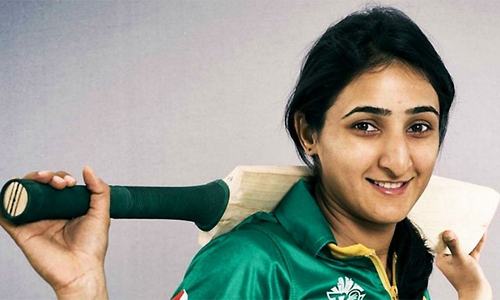
Balancing baby and batting, Bismah Maroof leads Pakistan's World Cup bid

Thirteen months ago, Pakistan captain Bismah Maroof was preparing to bid farewell to cricket and embrace motherhood.
Come March, she will be spearheading Pakistan's campaign at the World Cup in New Zealand, a comeback she hopes will inspire female cricketers in her homeland and beyond.
Family support and her love for the game were crucial but the 30-year-old says she owes her return to the parental support policy introduced by the Pakistan Cricket Board (PCB) last year.
“I didn't have any clarity about my future at that time. It seemed all's over,” Maroof told Reuters from Karachi.
“Then I spoke to the PCB management and (coach) David Hemp. They told me 'You can come back. Players in Australia, New Zealand and England do come back' (from motherhood).”
Maroof was the first beneficiary of the new PCB policy which entitled her to 12 months of paid leave and a guaranteed contract extension.
She would also have a support person — her mother — in New Zealand to help look after her child so she can focus on cricket.
“Without the policy, I probably would've quit the game by now,” said the batting all-rounder.
“Now I can travel with my daughter, and with my mother around, I can focus on cricket knowing my kid is in safe hands.
“My husband has been a big support, he kept telling me I can return to the game and inspire others.”
Maroof says she is in a “great space” and close to regaining her peak fitness ahead of Pakistan's March 6 opener against India at Mount Maunganui in a tournament the team have so far struggled in.
“We haven't reached the semis. If we can achieve that, it will be a big achievement for us.
“In the past, we've performed individually but didn't get results as a team. But we have a good squad now and we'll try our best to get into the semis.”

Social media
Her optimism stems from the change she has seen in Pakistan cricket since her debut in 2006.
Along with the standard of cricket, she has also seen how the stature of women cricketers grew in the country, something she attributes to social media.
“There were no social media those days, and nobody knew us,” said the veteran of 216 international matches.
“Now everybody treats us on par with the male cricketers. The recognition we get there is huge. We've become role models for others. It's a big, big change.”
It could be a double-edged sword though and Maroof advises her teammates to shun social media during the World Cup.
“Of course sometimes they (followers) make harsh comments, but that's how social media is.
“During the T20 World Cup in Australia (in 2020), I learnt a lesson that we should not use social media while on tour and during big tournaments.”