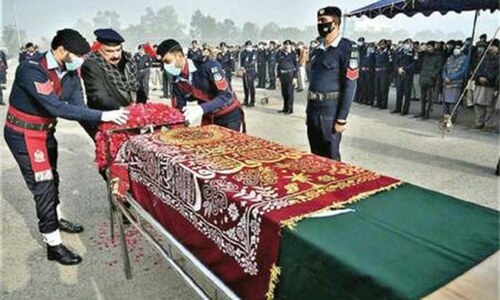
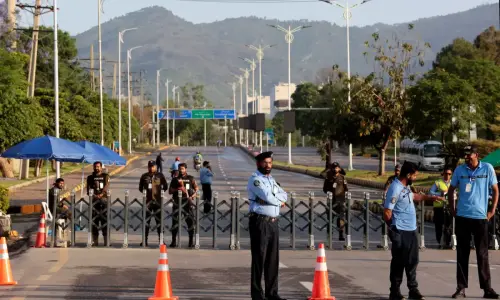
MONDAY night’s assault on a police party in Islamabad, which left one cop dead and two injured, marks a significant uptick in the banned Tehreek-i-Taliban Pakistan’s resurgent campaign of militancy.
By carrying out such an audacious attack in the capital where there is a heavy security presence on account of numerous sensitive locations, including dozens of diplomatic missions, the banned terrorist outfit indicated its capacity to wreak mayhem in ‘mainland’ Pakistan — if and when it chooses to. Responsibility for yesterday’s IED blast in Lahore’s Anarkali area that killed at least two people and injured 26 may have been claimed by Baloch insurgents, but it nevertheless underscores the multidimensional nature of the militant threat that Pakistan is once again facing.
Until now, in its latest iteration, the TTP had mainly been targeting security forces in the former Fata area, as well as tribal leaders, peace campaigners and government officials. For locals, the violence has revived memories of the nightmare years when the area was a terrorist hub, and a target of US drone attacks and Pakistan Army offensives. If reports are to be believed, the TTP has been chomping at the bit to unleash full-scale attacks but has so far been ‘restrained’ by the Afghan Taliban who have, however, refused to take action against the terrorist group.
Read: Will Afghan Taliban take any real steps to stop TTP terrorists for Pakistan? Analysts weigh in
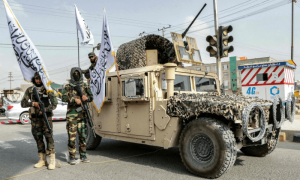
The US forces’ retreat and the Afghan Taliban’s storming back into power 20 years after coalition forces overthrew their first regime has been a huge morale booster not only for the former insurgents but also for their ideological comrades from Pakistan. It has also burnished the fighting capabilities of both, for they were able to seize arms and equipment worth billions of dollars left behind by the retreating US forces.
Sadly, the emerging scenario speaks of a monumental failure of policy in which the Pakistani state wilfully refused to gauge the extent of affinity between the Afghan Taliban and the TTP and what could transpire in the event of a US withdrawal from Afghanistan. It was only recently that army chief Gen Qamar Bajwa was quoted as acknowledging that both were ‘two sides of the same coin’. Remarkably, even the fact that the Afghan Taliban never uttered a word of condemnation against the TTP’s acts of terrorism in Pakistan — with the exception of the APS Peshawar massacre — did not change the state’s blinkered approach. And now the people of Pakistan may have to pay the price.
Published in Dawn, January 21st, 2022