Biden signs bill banning goods from China's Xinjiang over forced labour


US President Joe Biden on Thursday signed into law legislation that bans imports from China's Xinjiang region over concerns about forced labour, the White House said, provoking an angry Chinese condemnation.
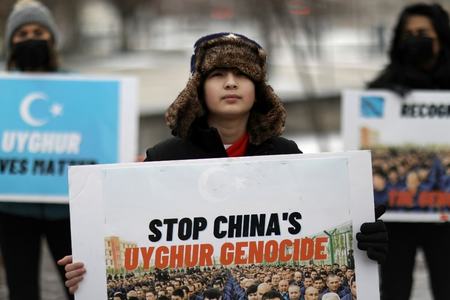
The Uighur Forced Labor Prevention Act is part of the US pushback against Beijing's treatment of China's Uighur Muslim minority, which Washington has labelled genocide.
The bill passed Congress this month after lawmakers reached a compromise between House and Senate versions.
Key to the legislation is a "rebuttable presumption" that assumes all goods from Xinjiang, where Beijing has established detention camps for Uighurs and other Muslim groups, are made with forced labour. It bars imports unless it can be proven otherwise.
Some goods — such as cotton, tomatoes, and polysilicon used in solar-panel manufacturing — are designated "high priority" for enforcement action.
China denies abuses in Xinjiang, a major cotton producer that also supplies much of the world's materials for solar panels.
Its Washington embassy said the act "ignores the truth and maliciously slanders the human rights situation in Xinjiang".
"This is a severe violation of international law and norms of international relations, and a gross interference in China's internal affairs. China strongly condemns and firmly rejects it," embassy spokesperson Liu Pengyu said in an emailed statement.
He said China "would respond further in light of the development of the situation", but did not elaborate.
Nury Turkel, Uighur-American vice chair of the US Commission on International Religious Freedom, told Reuters this month the bill's effectiveness would depend on the willingness of Biden's administration to ensure it is effective, especially when companies seek waivers.
US Secretary of State Antony Blinken said Biden's approval of the law underscored the "United States' commitment to combatting forced labour, including in the context of the ongoing genocide in Xinjiang."
"The State Department is committed to working with Congress and our interagency partners to continue addressing forced labour in Xinjiang and to strengthen international action against this egregious violation of human rights," he said in a statement.
One of the bill's co-authors, Democratic Senator Jeff Merkley, said it was necessary to "send a resounding and unequivocal message against genocide and slave labour."
"Now ... we can finally ensure that American consumers and businesses can buy goods without inadvertent complicity in China's horrific human rights abuses," he said in a statement.
In its final days in January, the Trump administration announced a ban on all Xinjiang cotton and tomato products.
The US Customs and Border Protection agency estimated then that about $9 billion of cotton products and $10 million of tomato products were imported from China in the past year.