Riot police deployed in Iranian city after 67 arrested

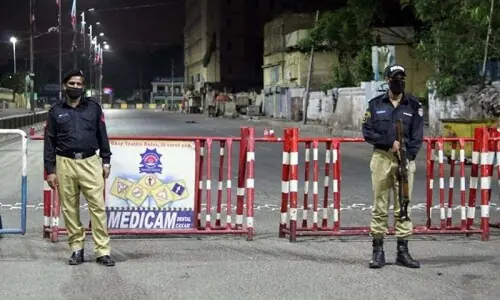
TEHRAN: Riot police were deployed in force on Saturday in the Iranian city of Isfahan, a day after dozens were arrested in violent protests over the drying up of a lifeblood river.
Security forces fired tear gas during the clashes with stone-throwers in the protest in the dry bed of the Zayadneh Rood river that crosses the city, Fars and ISNA news agencies said.
“We have arrested 67 of the main actors and agitators behind the troubles,” police General Hassan Karami said on Saturday. He said between 2,000 and 3,000 “rioters” took part in the protest.
On Saturday, the situation was “calm” and streets empty, with riot police deployed on the city’s Khadjou bridge, an Isfahan city resident said.
The demonstration was the latest since protests kicked off on November 9 in Isfahan, some 340 kilometres south of Tehran, a tourist magnet due to its majestic mosques and heritage sites, including a historic bridge across the river.
But it was the first to turn violent.
Between 30,000 and 40,000 farmers and city residents turned up for the gatherings last week, estimated Gen Karami.
The riverbed has been the rallying spot for farmers and other people from across Isfahan province protesting the lack of water since November 9.
Drought is a reason, but they also accuse the authorities of diverting water from the city to supply the neighbouring province of Yazd, which is also desperately short on supplies.
“I used to walk along the riverbed with friends, but today the riot police are deployed in large numbers near the Khadjou bridge and they are asking people to avoid the area,” said a woman in her 50s.
During the clashes on Friday, some people set fire to objects in the city, Fars and ISNA reported. “After the farmers left, the opportunists and counter-revolutionaries were left behind, which made it easy for the security apparatus, especially the police, to identify and arrest those who destroyed public and state property,” Isfahan police chief Mohammad-Reza Mirheidari said on television.
But members of the security forces were hit by fire from hunting rifles, he said, without specifying how many.
One of them was stabbed, although his condition was not believed to be critical.
A Fars journalist said two bulldozers were used to destroy a pipe taking water from Isfahan province to Yazd.
“Among the injured demonstrators, two are in a serious condition,” Nourodin Soltanian, spokesman for Isfahan University of Medical Sciences, told the Mehr news agency on Saturday. Recently, there have been almost daily protests in the region of Isfahan, which has been hit particularly hard by drought.
On Saturday, the ultra-conservative daily Kayhan pointed the finger of blame for the violence at “mercenary thugs”, whereas the pro-reform Etemad said the protests in Isfahan showed a “lack of trust in the government”.
Last Sunday, more than 1,000 people marched towards the governor’s office in the western province of Chahar-Mahal Bakhtiari to demand a solution to water shortages, state media reported.
According to Fars, farmers and local authorities struck a deal on Thursday about water distribution.
President Ebrahim Raisi met representatives from the provinces of Isfahan, Yazd and Semnan earlier this month and vowed to resolve water issues.
Iran’s supreme leader Ayatollah Ali Khamenei has said the topic is the country’s top problem, without making reference to the protests.
Published in Dawn, November 28th, 2021