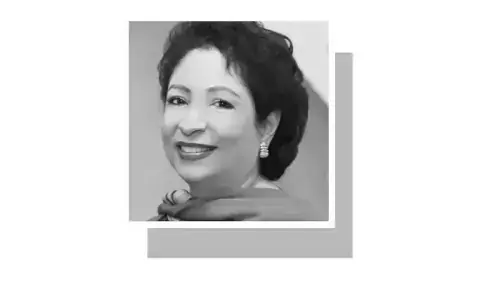
LAHORE: Forced marriage isn’t just making someone enter into a marriage, but when one cannot the exit the marriage is equally forced, stated Shirkat Gah Executive Director Farida Shaheed at the session, ‘Minorities under threat -- forced conversions and marriages’, on the concluding day of the third Asma Jahangir Conference on Sunday.
Ms Shaheed, the moderator, then gave the floor to Canadian High Commissioner Wendy Gilmour, who compared statistics of underage marriages over the decades and that the issue was mostly reported in aboriginal communities or small religious groups. She cited societal and cultural factors behind the phenomenon as well as parental expectations, poverty and lack of opportunities. Underage marriages, she said, resulted in young girls having less control over their bodies, family planning decisions, most dropped out of schools and were impacted by adverse effects of pregnancies.She also mentioned how the Canadian government was working with Pakistan to eliminate these issues, at the heart of which was poverty and lack of opportunities.
Peter Jacob of the Centre for Social Justice lamented that rejection of the forced conversion bill underlined the short-lived recognition of the problem. “I don’t recall the last time when parliament discussed religious freedom, but it has passed several resolutions and legislation to restrict the same. Rejection of the bill has emboldened perpetrators of forced conversions.”
He then posed a question whether the committees and institutions, especially the Council of Islamic Ideology (CII), behind the rejection had the competence and jurisdiction legally and constitutionally regarding forced conversions of underage minorities.
Defending the rejection of the bill, CII Chairman Dr Qibla Ayaz referred to the constitution that said no law repugnant to the holy Quran and Sunnah could be enacted. “There are problems in the process of conversion by choice that a joint committee of the religious affairs ministry and CII objected to.”
Suggesting the term be changed to ‘regulation of religious conversion’, he said forced conversion would mean it is accepted that Pakistan has a problem, which it didn’t “barring a case or two from parts of Sindh and south Punjab, but largely there was no problem in the country”.He suggested dealing with the issue together with the religious affairs ministry, CII, NGOs and the human rights ministry by chalking out a bill that will be “implementable and non-controversial”.
Joining online, Dr Ewelina Olchab, co-founder of the Coalition for Genocide Response, said child and forced marriages were omnipresent despite international standards and recognition of the issue as modern day slavery. She said she was working with Pakistan’s all-party parliamentary group on minorities and had found that legal recourse in cases of forced conversions and marriages was either not available or was ineffective.
Minority rights activist Ayra Indreyas stressed the minority communities were subjected to multiple marginality issues that stemmed from social divisions of class, caste, gender, religion. She cited her own research on the issue that there was “tension between women’s choices and patriarchal community claims, so there is a very thin line to substantiate the conversion as it’s a one-way practice”. The converted girls, she stressed, had to live with a shadow of their previous lower caste, as their religious identities were inscribed in their lives.
Economist and historian from the UK, Dr Nasreen Rehman, talked about the UK’s marriage laws and how they defined a valid marriage: there must be proof of capacity, one must be able to understand mentally what it means to be married, and if the two parties have attained legal age of consent. “Both parties to a marriage must give free, full, informed consent, and there must be proof of it.” Addressing Dr Ayaz, she said forced marriage is a hidden crime because how does one even know that full and free consent had been given.
Dr Rehman added that the LGBTQ community was also forced into marriages by having religious people guide them into it.
Additional Advocate General of Sindh High Court Kalpana Devi rued that the day the forced conversion bill was rejected she felt orphaned. She asked Dr Ayaz why conversion only happened for teen girls and that too for the purpose of marriages. “In Sindh, only 2-3pc of my community is left as the rest have been forced to flee Pakistan after facing forced conversions. We are repeatedly asked for proof of patriotism.”
Published in Dawn, November 22nd, 2021