0
0

THIS is apropos the article ‘History: The British Conquest of Sindh’ (Oct 31) which, to my eyes, belittled the Talpurs and their rule in Sindh. It is a sad reality that while the British had to demonise the Talpurs to justify their transgressions and keep them in extended exile, their version of history has been blindly accepted by the so-called historians here who have never done independent research on the arrival and rule of the Talpurs.
The said article relied heavily on Dr Hamida Khuhro and English writers, and overlooked Dr N. A. Baloch, an eminent historian, whose talk ‘Foundations of Talpur rule in Sindh’, delivered as the Hakim Mohammad Said Memorial Lecture, and since available in published form, proved with documentary evidence that the situation was contrary to what the biased historians want us to believe.
The study quotes Dr H.T. Sorely, no friend of the Talpurs by any means, from the ‘Gazetteer of Sindh’ 1954, to the effect that by possessing “Shikarpur and Sukkur and the neighbouring territory, the Mirs completed their design of making Sindh one single unit under their control … Thereafter they maintained their authority in a manner which Sindh had not known for centuries.” The same author compliments the Talpurs for recovering Karachi from the Khan of Kalat in 1795, and, in 1813, Umerkot from Jodhpur.
Unfortunately, the article quoted Dr Hamida as saying that the Talpurs left their hilly abode and came to Sindh “with their camel caravans, wild hillmen in their baggy trousers, long shirts, long matted hair, and huge turbans, carrying their sheep across the hill streams, their women on the camels, and bards singing of the great deeds of Baloch heroes.” This is a gross misrepresentation of reality.
The fact is that the sons of Mir Sulaiman Kako of Dera Ghazi Khan, namely Mir Hotak, Mir Manik, Mir Aali and Mir Jeevan, came to Sindh circa 1680 AD with a large number of followers, and most of tribes from Dera Ghazi Khan long settled here came with them. The Talpurs though numerically few had a large enough influence to be followed by the other Baloch tribes.
Mir Shahdad Khan became a trusted adviser of Mian Yar Muhammad Kalhora, and his eminent status is established by the fact that in an order of remission from revenue by Mohammad Mehdi under the seal of King Aurangzeb in the year 1704, he is addressed as ‘Riffat Panah’. Uncultured and unlettered ‘wild hillmen’ do not get addressed in such terms by those in power.
Moreover, the Talpurs were educated, and patrons of literature and arts even before they became rulers. I have in my possession a manuscript of Saadi’s book, Gulistan, commissioned by Mir Mahmood Khan in 1780; three years before the Talpur rule was established in Sindh.
Looking at the events of Battle of Miani of 1843, with the military strategies and other developments that have taken place since, and blaming the Talpurs when even the larger and more powerful states in India succumbed to the deceit and duplicity reinforced by better arms and training of the English forces, is like blaming a doctor for not being able to treat typhoid when the cure for typhoid was unknown.
If dividing Sindh for administrative and of course political reasons by the Talpurs is considered a great error, then why are there so many districts in Sindh today or so many provinces here today? There was no fratricide or regicide during the Talpur rule as opposed to what happened during the Kalhora rule in Sindh or in other states of India, and this alone shows that the division was indeed beneficial.
The Kalhoras faced 81 uprisings during their 82-year rule from 1699 to 1783. In contrast, there were only two minor uprisings from the relatives during the Talpur period extending over 60 years up to 1843.
This fact alone is enough to prove beyond doubt that the Talpurs worked for the welfare of people and provided them with peace and tranquillity.
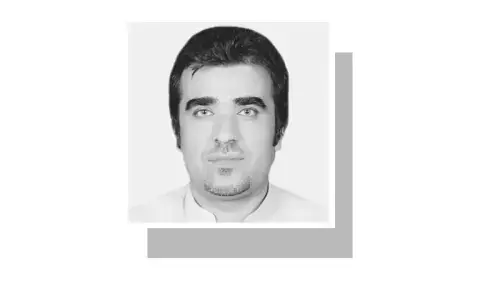
Mir Mohammad Ali Talpur
Hyderabad
Published in Dawn, November 11th, 2021