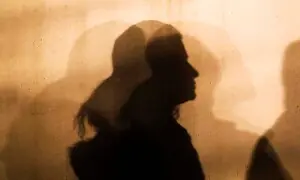
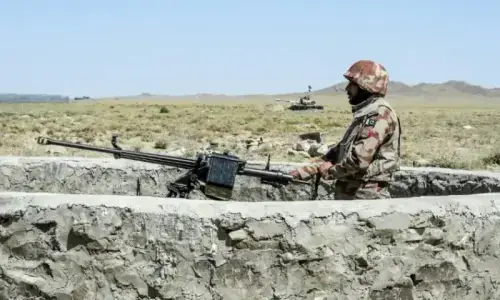
THE story of Majid Khan, a Pakistani Guantánamo Bay prisoner sentenced for links to Al Qaeda, is a harrowing one. This month, Khan became the first person to make a public statement about the torture he endured after being detained in the wake of the Sept 11 attacks. In a 39-page statement, he described being tortured in Pakistan, Afghanistan and another country following his capture in Karachi in March 2003. Khan told the sentencing jury, who is now urging clemency for the detainee, that he was raped, beaten and water-boarded by CIA interrogators. The jury members who sentenced Khan have called his torture by the CIA a “stain” on America. Khan’s ordeal is unfortunately a reality shared by countless other detainees who have faced the worst of the CIA’s ruthless and demeaning interrogation techniques — tactics that in most jurisdictions are illegal and have time and again yielded nothing but contempt for the US. In the wake of the 9/11 attacks, former US president George W. Bush said the CIA had saved lives by using “enhanced interrogation techniques”, a euphemism for torture which includes sleep deprivation, slapping, and subjecting detainees to cold and simulated drowning. The recent case of Palestinian Gitmo detainee Abu Zubaydah, too, has brought attention to Washington’s torture programme – something which the US government for years has kept hidden citing the state secrets privilege.
The truth is that the CIA’s torture programme was very much a playbook followed by its contractors both in black sites across the world where detainees were kept and then later at Guantánamo. This prison at an American naval base in Cuba was created at a time when the US was reeling from the Sept 11 attacks and had somehow justified torture as an interrogation method, with the prison serving as an alternative jurisdiction where mainland court rules didn’t apply. Former president Obama had tried to shut down the site, and had famously admitted that, “in the dark halls of Abu Ghraib and the detention cells of Guantánamo, we [the US] have compromised our most precious values”. Yet, it still exists today, eating up millions of dollars each year and standing as an edifice that contradicts America’s much-touted commitment to human rights. This programme begins in a vacuum where rights, such as a fair trial or humane conditions, cease to exist. The very existence of Gitmo in this day and age is indeed a stain on America’s democracy and human rights record.
Published in Dawn, November 4th, 2021