154 Intelligence Bureau employees seek review of SC judgement


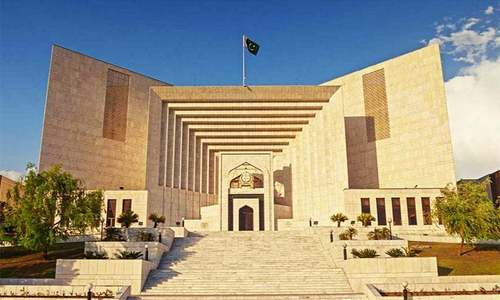
ISLAMABAD: A group of officers from the Intelligence Bureau (IB) has sought review of the Supreme Court’s Aug 17 judgement which rendered almost 17,000 government employees jobless.
Moved by Senator Raza Rabbani on behalf of 154 employees of the IB on Friday, the petition pleaded with the apex court to set aside Justice Mushir Alam’s judgement of Aug 17, his last day in office, which declared as illegal and unconstitutional a PPP-era law, known as the Sacked Employees (Reinstatement) Ordinance Act (SERA) of 2010. Under the law, a number of people were reinstated or promoted with retrospective effect.
Earlier, the federal government had filed a petition on Sept 28 through Additional Attorney General Sajid Ilyas Bhatti with a plea to the apex court to recall the Aug 17 judgement as well as to suspend operation of the verdict.
17,000 government staffers lost their jobs because of apex court’s Aug 17 verdict
The judgement stirred a furore and led to a sit-in outside parliament at a time when President Dr Arif Alvi was addressing the joint session on Sept 13.
The fresh petition has argued that the Aug 17 judgement of the Supreme Court affected employees of various organisations. Besides the Intelligence Bureau, the others are: Commissioner of Afghan Refugees, Khyber Pakhtunkhwa; the National Highway Authority, Pakistan Telecommunication Corporation, Overseas Pakistanis Foundation, Islamabad, State Life Insurance Corporation, Civil Aviation Authority, Water and Power Development Authority (Wapda), Sui Southern Gas and Trading Corporation of Pakistan.
The petition argued that the Supreme Court judgement suffered from a patent error “floating on the surface”. Moreover, the petitioners contended, the discussion and conclusion in the judgement were erroneous as they had no relevance to the SERA.
Article 242 of the Constitution pertains to initial appointments made in the civil service and is controlled by the word ‘appointment’ in Article 240. According to the petitioner, the plank of the Aug 17 verdict was that the procedure provided under Articles 240 and 242 had not been followed and appointments of civil servants cannot be made through an act of parliament.
The judgement has erred by not considering that the Intelligence Bureau was included in the schedule pertaining to “posts excluded from the purview of the commission”. This means all its posts were outside the commission’s purview, the petitioners asserted.
“There is no requirement under the law or the Constitution that the employees of corporations, autonomous and semi-autonomous bodies be subjected to provisions of Articles 240 and 242,” the petitioners stressed,
“Moreover, the judgement under review has erred, when it concludes that it was a settled position in law that the parliament cannot ‘destroy, annul, set aside, vacate, reverse, modify or impair the final judgement of a court of competent jurisdiction’.”
The judgement under review has further erred in law by observing that the fundamental rights of regular employees granted them by Articles 4, 9 and 25 of the Constitution stood violated as the SERA had placed them at a disadvantage vis-à-vis seniority and other benefits for reinstated employees.
The petition recalled that no employee, who stood terminated in consequence of a judgement of any court, got reinstated under the Sacked Employees Restoration Act.
Although employees in BPS-1 to 15 were not required to appear before the Federal Public Service Commission even for their initial appointment, they were affected nonetheless by the judgement under review, the petition contended.
Corporations, autonomous and semi-autonomous bodies or bodies functioning under federal laws have their own process of appointment and conditions of service, it added.
Published in Dawn, October 2nd, 2021