EU, US urge Iran to give access to IAEA

VIENNA: The EU and the US on Monday urged Iran to allow inspectors access to a nuclear site, while Tehran argued the facility was exempt from a recent agreement with the UN watchdog.
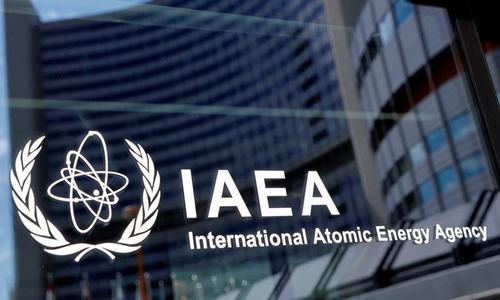
The Vienna-based International Atomic Energy Agency (IAEA) said on Sunday it had been denied “indispensable” access to the TESA Karaj centrifuge component manufacturing workshop near Tehran contrary to a Sept 12 agreement with Iran.
Iran’s ambassador to the IAEA Kazem Gharibabadi on Monday rejected the charge.
“During the discussions in Tehran and Vienna, Iran indicated that...equipment related to this Complex are not included for servicing,” he tweeted, referring to IAEA work on its surveillance equipment.
Sunday’s IAEA statement “isn’t accurate and goes beyond the agreed terms,” he added.
At a Vienna meeting of the IAEA board of governors on Monday, the EU said it urged Iran to allow access “without any further delay”, expressing its “deepest concern”. “This is a worrying development,” a statement said.
The US likewise said it was “deeply troubled” and urged access “without further delay”.
“If Iran fails to do so, we will be closely consulting with other board members in the coming days on an appropriate response,” Louis Bono, the US representative to the IAEA, said without giving further details.
Earlier this month, discussions of a resolution at the board of governors censuring Iran were dropped, according to diplomats, after the IAEA and Tehran agreed on limited but continued access for the agency. The agreement came days after the nuclear watchdog had decried a lack of cooperation from Tehran.
But in his latest report on Iran to members Sunday, IAEA Director General Rafael Grossi said that agency inspectors had been allowed access to “all necessary locations” except the TESA Karaj workshop from Sept 20-22.
The news comes amid stalled EU-brokered negotiations to revive a 2015 landmark agreement scaling back Iran’s nuclear programme in exchange for sanctions relief.
That deal started to fall apart in 2018 when the US withdrew from it and reinstated sanctions. Iran in turn again started to ramp up its nuclear activities.
Talks began in April in Vienna between Tehran and the remaining five parties to the 2015 deal aimed at bringing Washington back. But that dialogue has been stalled since June, when ultraconservative Ebrahim Raisi won Iran’s presidential election.
Iran’s foreign minister said that talks would restart “very soon”, but the US has called for a clear timetable.
Published in Dawn, September 28th, 2021