KARACHI: The idea that elite business schools churn out fake-it-till-you-make-it pretentious brats every year is perhaps as old as the idea of higher education itself.
In the local context, fresh graduates from top-rated b-schools like the Institute of Business Administration (IBA) and the Lahore University of Management Sciences tend to receive favourable treatment from employers of all hues.
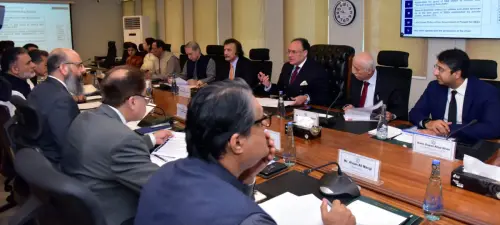
So the central point of discussion at the CEO Forum held at IBA on Thursday was: how ready are b-school graduates on day 1 of their jobs to start being useful?
“Do you have to retrain them?” asked IBA executive director Dr Akbar Zaidi who moderated the panel discussion.
Corporate leaders discuss linkages between industry and academia
The consensus answer was in the affirmative.
According to Katalyst Labs CEO Jehan Ara, universities like IBA train students to go into multinationals and large corporate entities. But the job market has changed now as more and more graduates are joining start-ups and “working in areas that IBA didn’t think they would in the past”.
“What you’re teaching them here may not be sufficient for what they’re facing out there,” she said.
The industry-wide complaint about “even better schools” is that the human capital needs to be retrained, she noted. “They need at least three to six months of training before they can start generating revenue.”
As for the bloated sense of entitlement that graduates of elite schools are known for, she said the situation might actually be getting better now. “In the past, when anybody went to a good school, they assumed they’d get a particular salary and a particular status. How can you say you want a managerial position when you haven’t gone through the works? Sure, you have the education. But come on,” she said.
Hammering into the entitlement problem of graduates of highbrow b-schools, KFC Pakistan CEO Raza Pirbhai said one can’t become a “principal operator” at the global fast-food restaurant chain unless they have worked as a kitchen assistant.
Citing his own example, the Cornell University alum said he began his career in the fast-food business from scratch. “I started off as a kitchen assistant. I’ve waited tables. I’ve done every single job in a restaurant that can be done.”
Employee expectations
But employee expectations have changed now, he said. “What happens now is that none of these new kids really want to go that route,” Mr Pirbhai said, adding that earning a degree doesn’t make anyone entitled to a particular job.
“Back in our time that wasn’t the case,” he said while emphasising that the privileged attitude of fresh graduates has become a barrier to their growth.
“As of today, I have 100 vacancies in KFC. I can’t fill those vacancies because the applicants say they won’t mop the floor.”
Published in Dawn, September 17th, 2021