Railway hospitals being outsourced, says minister



- Public-private partnership mode agreement to last for 30 years
- Decision aimed to upgrade health facilities
- Pakistan Railways employees associated with hospitals to remain unaffected
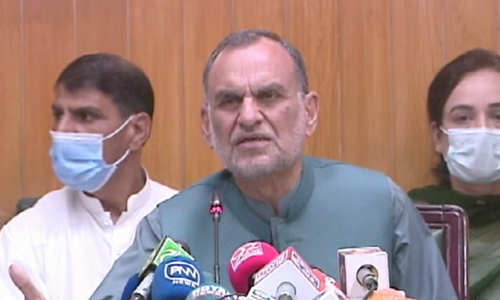
ISLAMABAD: Minister for Railways Azam Khan Swati on Wednesday said railway hospitals in the country were being outsourced in order to upgrade, expand and rehabilitate them under the public-private partnership mode.
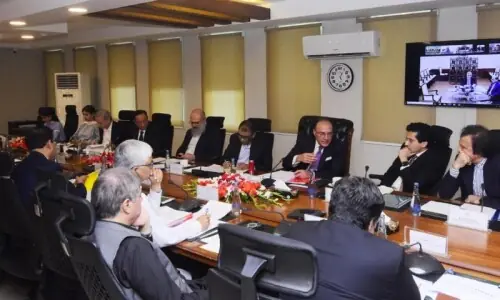
The Ministry of Railways had organised a roadshow to attract the private sector to join the government in its efforts to improve and upgrade health services in railway hospitals to provide modern facilities to people.
The proposed modality for the seven railway hospitals in Lahore, Multan, Peshawar, Karachi, Sukkur and Quetta is ‘build-operate and transfer’ (BOT).
Thepublic-private partnership mode agreement will be for 30 years, including two-year construction period.
Pakistan Railways is expected to receive an annual contract payment of Rs560 million against the seven hospitals.
The annual minimum guaranteed payment to Pakistan Railways by the private sector will be Rs150 million for Lahore, Rs150 million for Multan, Rs60 million for Karachi, Rs80 million for Sukkur, Rs80 million for Quetta and Rs40 million for Peshawar.
The Railway Hospital in Lahore currently has 266 beds which will be enhanced to 500 beds, Multan hospital’s current bed capacity is 84, and it will be raised to 500; Karachi hospital has 68 beds which will increase to 500 beds; the railway hospital in Sukkur has a bed capacity of 46 beds which will be upgraded to 500 beds; Quetta hospital will be upgraded to a 500-bed facility from its current 52 beds and the railway hospital in Peshawar, which currently has 30 beds, will become a 250-bed facility.
Mr Swati assured investors that the process of outsourcing would be transparent, adding that properties of Pakistan Railways were extremely valuable and were assets.
The chief guest at the road show, Special Assistant to the Prime Minister on Health Dr Faisal Sultan, welcomed the decision of the ministry to outsource all railway hospitals.
“The outsourcing will bring reforms in railway hospitals, which were necessary for introducing better health services for the public,” Dr Sultan said.
About the ‘Sehat Insaf Card’, he said the scheme was progressing with great success and soon it would be extended throughout the country.
In Khyber Pakhtunkhwa, he said all citizens had been given the ‘Sehat Insaf Cards’ and it was a big incentive for the common man who would be able to avail treatment both in public and private hospitals.
Terming it a step in the right direction, the special assistant said Pakistan Railways was one of the oldest and well-reputed institutions and the decision to outsource its hospitals was aimed at equipping them with the latest facilities through the participation of private sector.
However, he added, the employees of Pakistan Railways associated with the hospitals would remain unaffected.
He called on the private sector to invest in the health sector, saying that the objective of running railway hospitals in collaboration with the private sector was to reduce the operating costs of the hospitals and facilitate the public.
Published in Dawn, September 16th, 2021