PESHAWAR: Awami National Party senior vice-president Ameer Haider Khan Hoti on Saturday urged the international community to stop violence in Afghanistan and said all regional powers, especially Pakistan, Russia, Iran and China, should play due role for durable peace in the war-ravaged country.
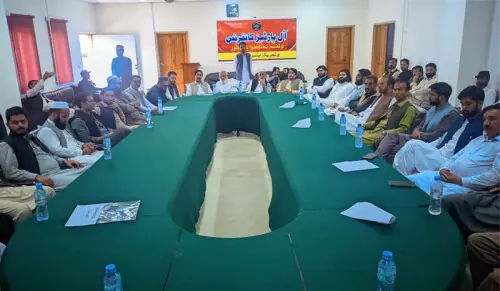
“It is the right of the Afghan nation to decide their future using the traditional platform of Loya Jirga to work out comprehensive peace plan for their country,” he told a public meeting held here in connection with the third death anniversary of party leader Haroon Bilour.
Mr Haroon was killed in a suicide attack in Peshawar while addressing an election corner meeting in Peshawar in 2018.
His father, Bashir Bilour, also lost life in a suicide attack in 2012.
ANP provincial president Aimal Wali Khan and senior party leader Haji Ghulam Ahmad Bilour also addressed the function.
Mr Hoti expressed concern about the deteriorating situation in Afghanistan and said the Pakhtun nation had been suffering for the last four decades. He said some powers had been playing with the destiny of the Afghan nation.
“We will not remain silent on the bloodshed of Pakhtuns anymore,” he said urging all powers to create conducive environment for the peaceful settlement of the Afghan conflict.
The ANP leader appreciated the Iranian government’s recent initiative to bring the Afghan Taliban and Kabul to talks to ease tensions in the war-ravaged country and said other regional countries, especially Pakistan, should follow suit.
Mr Hoti, who had served as the provincial chief minister from 2008 to 2013, said the ANP’s workers and leaders had rendered huge sacrifices during militancy.
Declaring the party workers true heirs of the motherland, he said hundreds of ANP supporters were martyred by militants.
The ANP leader claimed that the banned Tehreek-i-Taliban Pakistan had planned to establish a parallel government in the province in the name of Shariat.
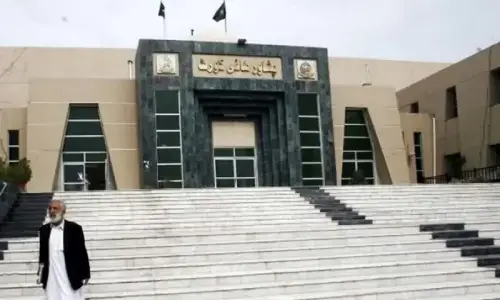
He said his government had negotiated with militants in Swat and accepted their ‘genuine’ demands, including the implementation of Nizam-i-Adal and replacement of judicial system with Qazi courts in the entire Malakand division in 2009.
“Thereafter, militants sent message that the government should not block their way and let them extend their religious and judicial systems to the entire province,” he said.
Mr Hoti said at that time, the Pakistani Taliban wanted to destroy schools, block the girls education and execute people publicly to terrorise others but his party waged a war against them.
He criticised the policies of the Pakistan Tehreek-i-Insaf’s federal and provincial governments in the centre and province for depriving millions of people in the country of their jobs.
Published in Dawn, July 11th, 2021