Pakistan’s exports to Australia have increased by 30pc, says high commissioner

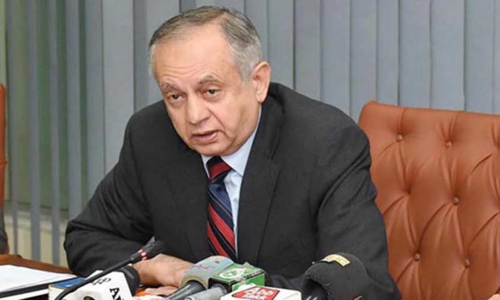
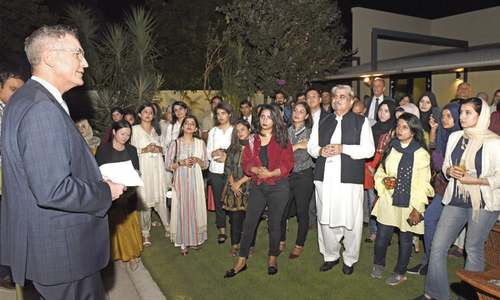
KARACHI: Australian High Commissioner Dr Geoffrey Shaw discussed ‘Pakistan-Australia relations and bilateral trade’ during a webinar organised by the English Speaking Union of Pakistan (ESUP) on Thursday.
He said Pakistan and Australia have strong linkages as “they both have democratic governments, an understanding of each other’s cultures and a love of cricket, which form the basis of strong Pakistan and Australia linkages, including people-to-people links as more than 84,000 Pakistanis call Australia their home”.
“Our region has seen growth in global trade and investment. We are also with Pakistan in navigating a geostrategic and economic landscape.
“Economy and security is best served on market-based principles. Times of crisis raise trade barriers, but an open economy and free trade is a priority for Australia. There should be an unrestricted flow of goods and we want to see this with Pakistan, too,” he added.
‘We are also exploring online education options with the Higher Education Commission’
He also said that Australia and Pakistan are working together at restoring markets as there is still a lot of potential and room for growth there. “There are encouraging signs, too, as Pakistan’s exports have increased by 30 per cent. This includes rice exports from Pakistan and more health supplements and infant formula from Australia,” the HC said.
Education and Covid-19 crisis
“Education, too, improves our relationship. But the Covid-19 crisis has affected this sector as students have not been able to travel due to it. Still, there are many Pakistani students who are already there in Australia. And we are waiting to welcome back many more who had left for home due to the pandemic. Meanwhile, we are also exploring online education options with the Higher Education Commission here,” he said.
The high commissioner spoke about robotics and telecommunication that can open new markets. “The new global markets over the next decade will be digital. The online world will outlast the pandemic. It has so much potential and would need robust routes for trade across borders,” he said.
“But, we want to have a cyberspace guarded by international law. What applies to the real world should also apply to the digital world and benefit everyone.”
Another point mentioned was about women and how they are a big part of a country’s economy. “When the potential of women grows, the economy grows. They are a major part of economic growth and prosperity. Pakistan has immense potential to create opportunities for women. We will continue to support Pakistan in gender equality in the public and private sector where loans will be offered to women entrepreneurs,” he said.
He also said that human rights also played an important role in trade. “Men, women and children have the right to peace and prosperity. From an economic perspective, there should be respect for human rights and companies should pay attention to Corporate Social Responsibility. Trade partners everywhere need to respect human rights as it is critical to the human supply chain,” he said.
Another area of interest was climate change. “Australia also shares the challenge of climate change with Pakistan. “Some 155 million people around the world are confronting hunger due to climate change, bad water governance and food security. Australia is a long-time supporter of Pakistan’s development through community. We have provided support to Pakistan during the 2005 earthquake and the 2010 floods. We want communities to be resilient to challenges and unpredictable natural calamities,” he said.
“We are looking at business and finance sectors through investments in green technology. We are reducing our carbon emissions and taking part in practical technology projects here in Pakistan and are glad that the United Nations selected Pakistan as host for these projects,” he said.
Aziz Memon, Majyd Aziz and Pervez Madraswala of the ESUP also spoke.
Published in Dawn, May 21st, 2021