Dwindling Pak-Afghan trade


 10
10


The declining volume of Pakistani exports to Afghanistan is not only depriving the country of a major market for its products but also giving local exporters sleepless nights.
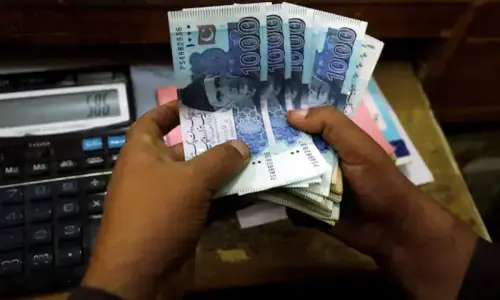
Data released by the State Bank of Pakistan (SBP), reported by this newspaper earlier last month, showed that Pakistan’s exports to Afghanistan fell 5.5 per cent from $790 million to $746.3m during the first nine months of the current fiscal year.
Businessmen in Peshawar, which is a stone’s throw from Torkham, one of the major crossing points into Afghanistan, say the declining trend is tantamount to squandering a great opportunity. It is costing businesses and the country greatly, they say.
The hurdles range from non-tariff barriers and apathetic bureaucracy to poor infrastructure and volatile geopolitics.
Engineer Manzoor Elahi, senior president of the Sarhad Chamber of Commerce and Industry (SCCI), told Dawn that Pakistan’s annual exports to Afghanistan have tumbled from $2 billion a couple of years ago to $700m.
‘The volume of trade could go up to 1,000 trucks a day from the current level of 400. But there is no urgency in the officialdom to fast-track the resolution of longstanding issues’
Mr Elahi said that Afghanistan was now relying more and more on India, Iran and its Central Asian neighbours for its trade needs. It has turned away from the Pakistani market as its main source, he added. He said exports of cement and iron products have been considerably reduced as Afghanistan has turned to Central Asian Republics for these products. Many other items were pouring into Afghanistan from Iran.
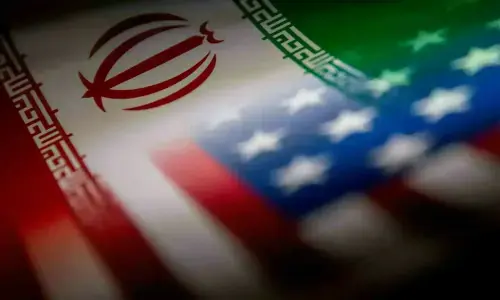
“Iran is unable to trade with other countries due to American sanctions. But in the case of Afghanistan, it is not deterred by any restrictions,” he said. He said Iranian goods have flooded the Afghan market due to this reason. “Pakistan used to export up to 50,000 tonnes of cement and 100,000 iron bars until a couple of years back, but not anymore,” he said. Mr Elahi said exports of confectionery items to Afghanistan have also dropped 50pc.
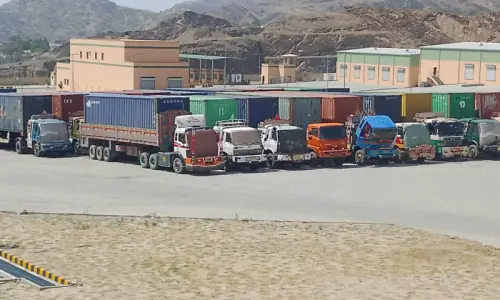
He was of the view that the volume of trade with Afghanistan could go up to 1,000 trucks a day from the current level of roughly 400 trucks. However, he said there was a lack of understanding and urgency in the officialdom to fast-track the resolution of trade issues. Even minor problems remain unresolved for months because of bureaucratic red tape, he said.
He said the Pak-Afghan trade has the potential of $8bn-$10bn a year. He said slow operations along the border crossings were also delaying trade and the number of scanners at the Torkham border crossing needs to go up to four from the current two in order to expedite goods handling.
Regarding the opening of border crossings with Afghanistan, Mr Elahi was of the view that there was less enthusiasm for fully utilising the potential and Torkham was the main focus of business.
He said they persuaded Pakistani authorities to lower tariffs on 153 items while the Afghan side, despite having agreed to lower taxes on 27 Pakistani items, has yet to deliver on its promise. He said the business communities of Lahore and Karachi were consulted about trade issues with Afghanistan while Khyber Pakhtunkhwa–based businessmen were ignored.
SSCI President Sherbaz Bilour concurred with Mr Elahi’s assertions. He said India has captured the Afghan market. He said Pakistan was a big source of pharmaceutical products to Afghanistan. However, now they were getting their products from India. He said ghee and oil makers that used to export to Afghanistan have also suffered greatly. “In some cases, our products are not even competitive anymore due to price hikes in the country,” Mr Bilour said.
He also echoed the sentiment about the poor trade infrastructure at border crossings. Besides a lack of required facilities, he said conflicting domains of many government organisations were also making matters worse for businesses.
Mr Bilour said the absence of fair trade would definitely lead to smuggling, which was likely to inflict more damage on the economy.
Israr Ahmed Shinwari, spokesperson for the Muttahida Transport Association, said that the transport business was mostly in the hands of people from Khyber Pakhtunkhwa and the loss of business from Afghanistan was ultimately their loss. He said the Torkham border crossing was currently operating inefficiently. “On Friday, our trucks got clearance to cross into Afghanistan after waiting for about four days, which was obviously not good for business as well trade between both countries,” Mr Shinwari added.
Published in Dawn, The Business and Finance Weekly, May 10th, 2021