Govt moves swiftly to secure $500m IMF tranche


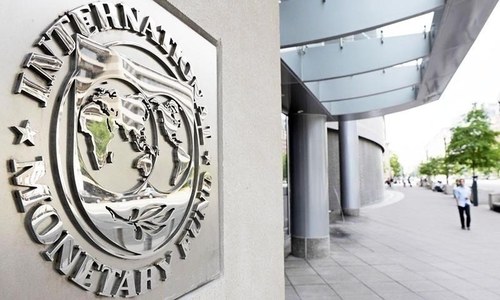
ISLAMABAD: In a serious move to fulfill the IMF conditions for securing release of $500 million tranche, the government has decided to implement the withdrawal of corporate tax exemptions and putting in place a mechanism for automatic electricity power tariff increases of about Rs5.36 per unit (34 per cent) over the next 27 months through presidential ordinances.
The IMF executive board meeting is scheduled for March 24. The board can only approve the tranche when Islamabad puts in place the legislations as per agreed deadline, which is now only possible through ordinances.
The immediate promulgation of an ordinance for the automatic electricity power tariff increases was felt so crucial that a bill had already been cleared by the National Assembly’s Standing Committee on Power on March 11 and is just awaiting a formal passage by the National Assembly.
Ordinances readied to implement power tariff hikes, end corporate tax breaks
“In order to show the resolve of the federal government regarding the implementation of the Circular Debt Management Plan (CDMP), and streamlining the tariff determination process, it will be essential to introduce the amendments to the amendments… as early as possible. It is, therefore, proposed that said amendments may be introduced through an ordinance,” said a hurriedly moved summary by the Power Division to the Federal Cabinet for approval.
The ordinance will be called “Ordinance to Further Amend the Regulation of Generation, Transmission and Distribution of Electric Power Act 1997”. The summary said the ordinance would put in place a system for transparent and judicious regulation of the country’s electric power sector based on sound commercial principles and socio-economic policies of the government.
It said a bill had been cleared by the NA committee for “introduction of automaticity in the notification of such tariffs determined by Nepra” and to “enable the GOP to impose surcharges on electricity consumers” and to “streamline the process of determination of uniform tariff”. The bill will now be sent to the National Assembly for consideration and approval and subsequently to the Senate for its process.
The summary said both houses of parliament were not in session while the federal cabinet had approved circular debt management plan for the next two years on March 16. “The said plan assumes that the principle of automaticity will have taken effect by the end of the instant month”, said the summary.
Well-placed sources in the Finance Division told Dawn on Friday that the Federal Board of Revenue (FBR) submitted a proposed bill in the National Assembly with a delay of two days when the lower house was already prorogued. The IMF, however, was not willing to accept this excuse and asked Islamabad to promulgate the proposed measures through a presidential ordinance. “We have already completed the formalities for the promulgation of the ordinance,” the sources said. Sources further said that the ordinance is only meant for compliance with the March 20 deadline as agreed with the IMF. However, the Fund has linked the approval of the tranche with the piece of legislation as assurance that Islamabad will not backtrack from its commitment.
Corporate tax reforms
The corporate income tax reforms are in line with recommendations of the IMF, which estimates it will generate revenue of Rs140bn annually.
It was agreed that Islamabad will put in place the legislation in parliament before March 20 with an agreement that it will come into effect from July 1.
The ordinance can be issued anytime in the next 24 hours to meet the deadline. With the introduction of the ordinance, the decisions will come into effect immediately, which were earlier agreed to be effective from July 1. The revenue implication as per ordinance will be for three months and 10 days of the tax year 2021.
According to the sources, the implementation of the tax exemptions implication from July 1 might not be an issue with the Fund.
Power tariff increases
Under the CDMP endorsed by the federal cabinet, the base electricity tariff across the country are planned to be further increased by a cumulative Rs5.36 per unit (more than 34pc) in at least three phases over the next two years.
The CDMP envisaged average uniform rate would gradually go up to Rs21.04 per unit (excluding taxes, duties, surcharges and other add-ons in the bill) that stands currently at about Rs15.68 per unit. This would be achieved through an increase of Rs1.39 per unit in tariff rebasing in June to curtail flow to existing circular debt by Rs13bn within this year, followed by Rs126bn next fiscal year and Rs136bn the year after, with a cumulative impact of Rs276bn in two years.
This will be followed by another Rs2.21 per unit increase in rates through another tariff rebasing in July 2021, involving revenue impact of Rs199bn next year and Rs215bn in FY23. The cumulative impact of this rebasing in July 2021 has been worked out at Rs414bn.
Yet another Rs1.76 per unit increase would be made through tariff rebasing again in July 2022 to generate additional Rs176bn.
Published in Dawn, March 20th, 2021