ISLAMABAD: The federal government and political parties must hold thorough consultations to reach a consensus decision on reforming the Senate election process instead of opting for hasty legislation without weighing its pros and cons, a Free and Fair Election Network (Fafen) statement said on Friday.
“Fafen considers it unwise to rush through a constitutional amendment for allowing an open ballot with only a month remaining for fresh elections,” the statement said.
It came at a time when the government is all set to introduce a bill providing for open voting in the Senate elections, and the opposition is finding faults with the idea.
According to Fafen, if the federal government decides to pursue this course, in that case, it should carefully and critically analyse whether or not its existing proposal for amendment to the Constitution’s Articles 59 and 226 served the purpose of bringing transparency and curtailing horse-trading and use of money in the Senate elections.
It was observed that the proposed constitutional amendment, pending with the National Assembly since October 2020, may not offer a strong deterrence to vote-buying for the Senate elections as it does not define any penalty for national and provincial lawmakers voting against the party line.
Fafen suggested that the proposed amendment may be made more purposive by including penal provisions against such voting in the relevant anti-defection clauses.
Says it’s unwise to rush through amendment for allowing open ballot in elections
Fafen suggested that the political parties should take a more democratic approach. It proposes exploring a direct election method for the Senate, which epitomises the federation of diverse regions and may refer to the spirit of the constitutional scheme of Senate, reflected in the constitution committee’s work. Its chairperson, late Abdul Hafeez Pirzada, had told the National Assembly on Dec 31, 1972, while presenting the committee report, “…the representation of political parties in the Senate has to be in the same proportion as they are represented in the Provincial Assembly.”
In this spirit, Fafen proposed a more straightforward method to accurately reflect the political parties’ representation in the Senate in the same proportion as in the provincial assembly. The seats to the political parties in the Senate based on either their seats or votes polled in the last general election for the provincial or National Assembly elections, as the case may be, will ultimately achieve the same purpose as expected from the open balloting proposal.
However, such an approach would require synchronising the frequency of the provincial assemblies and Senate elections, as the current scheme of Senate elections impedes the prompt translation of the people’s will expressed in the general election into establishing order in the state as required in the preamble of the 1973 Constitution. For instance, the Pakistan Peoples Party-Parliamentarians (PPP-P) was the largest party in the 2008 general elections and made a coalition government at the Centre, but it had to wait until 2012 to enjoy a majority in the Senate.
Similarly, the Pakistan Muslim League-Nawaz (PML-N) came to power in 2013, but it secured a majority in the Senate in 2015. Similar is the incumbent Pakistan Tehreek-i-Insaf (PTI) government’s case, which did not have enough numbers in the upper house of parliament to translate its legislative promises into reality. All these governments had public mandates, but they had to live on a bargain for nearly half of their terms because they lacked a majority in the Senate. The elections of the latter were timed differently from general elections.
Non-transparency
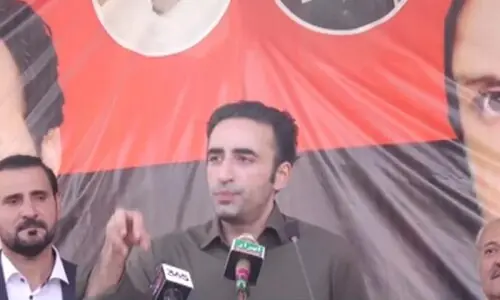
Meanwhile, former Senate chairman and PPP stalwart Mian Raza Rabbani has made it clear that he does not defend non-transparency in the electoral process.
In a statement, he said that in October 2020, the federal government tabled the 26th constitutional amendment bill in the National Assembly, wherein it sought amendment to Article 59(2) by replacing the words “transferable vote” with the words “open ballot” and further sought an amendment to Article 226 of Constitution, 1973.
He said that while the presidential reference was pending, they have decided to take up the bill.
“The question of whether the bill has been rightly moved under the Rules of Business, 1973 of the Federal Government and the Constitution, 1973, has come into serious question,” he remarked.
He said the amendment to Article 59(2) seeks to replace the word “transferable” with the word “open”. The deletion of the word “transferable” in actual fact means that the system of proportional representation of a single transferable vote is being replaced. The purpose of the single transferrable vote was to allow all shades of political opinion present in the provincial assemblies to be reflected at the federal level i.e. in the House of Federation, the Senate.
Published in Dawn, January 30th, 2021