

New Delhi’s air quality at worst levels this year
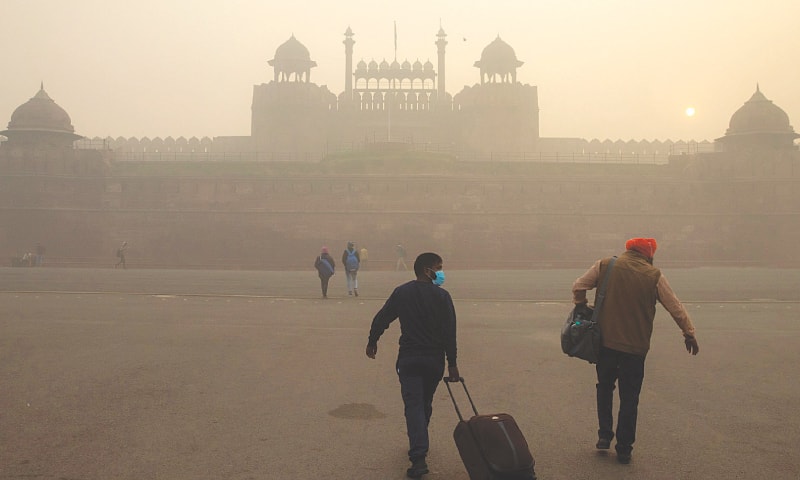
NEW DELHI: Air quality in India’s capital deteriorated to its worst this year on Tuesday, prompting a social media barrage of residents complaining about stinging eyes, sore throat and breathlessness in the middle of the coronavirus pandemic.
Delhi’s overall air quality index, which measures pollutants including PM2.5 particles, rose to 488, its highest level in a year, according to government data. That was up from 477 on a scale of 500 on Monday. The data showed the deadly particulate matter PM2.5, which can cause cardiovascular and respiratory diseases such as lung cancer, also reached its highest levels since November 2019 and stood 30 times over the World Health Organisation’s safe limit.
It comes as Delhi, suffering a “third wave” of coronavirus infections, is facing one of the worst spells of pollution in years, partly due to crop waste fires in neighbouring states and local emission from vehicle exhausts.
Residents complain of breathlessness
“About 85% of households in Delhi had at least one person complaining of difficulty in breathing, among other symptoms,” said Sachin Taparia, founder of LocalCircles.
The privately held community social media platform surveyed nearly 6,000 families on Nov 6-9 on the impact of air pollution.
Pollution in New Delhi had almost disappeared earlier this year, when the government imposed a nationwide lockdown to contain the coronavirus, but has returned since the government began lifting restrictions at the end of August.
Authorities have banned the sale and use of firecrackers ahead of the Diwali festival in a bid to curb pollution, but environmentalists have called on the government to do more.
“Delhi’s air has turned hazardous. Coal plants around Delhi need to be shut down immediately along with construction activities,” said Vimlendu Jha, the founder of non-profit Swechha.
Officials and businesses worry that a halt in industrial activity could hurt an economy only just bouncing back from a record slump in the second quarter.
SAFAR, India’s main environment monitoring agency, has forecast severe conditions over the next 24 hours due to stagnant winds and rising humidity levels, which trap pollutants longer.
Published in Dawn, November 11th, 2020




























