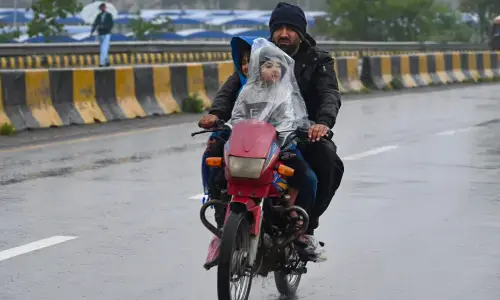
THE feared second wave of Covid-19 cases in Pakistan has arrived, with daily confirmed cases and hospitalisations increasing at an alarming rate. At the time of writing, 14 people in the previous 24 hours had succumbed to the virus and 825 had tested positive, marking a rise in both mortality and positivity rates. On Wednesday, after repeated warnings of rising Covid-19 cases across the country, the National Command and Operation Centre made it compulsory for all citizens to wear a face mask when leaving their homes — a directive that came as the positivity rate approached 3pc and the total reported number of active cases in the country crossed 11,000. All provinces have been asked to ensure that people wear face masks and adhere to the SOPs, particularly in bazaars, shopping malls, restaurants and on public transport.
The decision to enforce mask-wearing is indeed welcome and necessary, but it is a step that should have been taken much earlier. Many countries that emerged from the first wave of infections made mask-wearing mandatory even during the months when cases were fewer — a guideline authorities in Pakistan did not declare mandatory till this week. A few months after the pandemic began, international health authorities started to stress on the importance of mask-wearing as there is clear evidence that face coverings significantly lower transmission. In the post-July euphoria period in Pakistan, however, when Covid-19 cases were successfully lowered after restrictions and SOPs were enforced, mask-wearing sadly remained voluntary. Still, it is not too late to enforce the SOPs and stem the rising Covid-19 tide to prevent an all-out disaster. Authorities must build on the knowledge and strengths that helped them lower the curve previously and use the data available to take decisive action. They must also improve their messaging to the public and convey how serious the threat has become. Without strict adherence to the SOPs, the closure of schools and businesses will become inevitable — something that will deeply impact the education sector and economy which are already reeling from the restrictions of the first wave.
Published in Dawn, October 29th, 2020