Kuwait's new crown prince is a security czar who shunned the limelight


 0
0

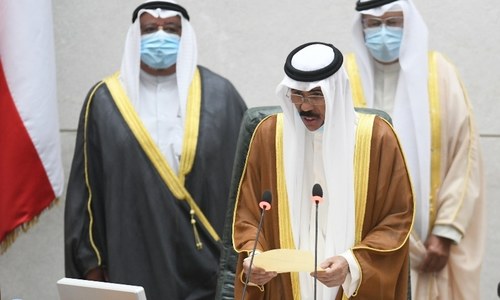
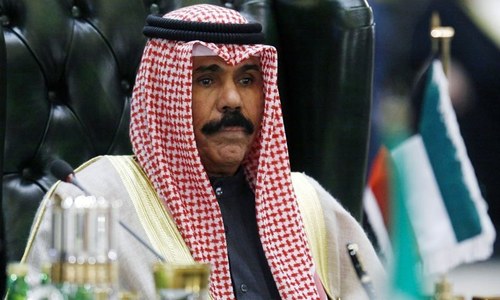
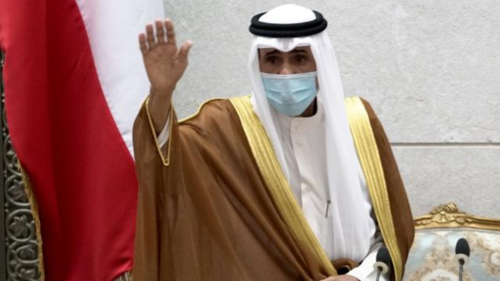
Kuwait’s crown prince in waiting, Sheikh Meshal al-Ahmad al-Sabah, is a forceful figure who steered clear of political battles and public roles and spent much of his career helping build the Gulf Arab state’s security and defence apparatus.
Close to the late emir Sheikh Sabah al-Ahmad and new ruler Sheikh Nawaf al-Ahmad, Kuwait experts say, he is expected to help guide state affairs in the US-allied OPEC member state.
“The emir will listen to his views, he will have an impact in that way,” said Kuwaiti political scientist and former UN envoy Ghanim Alnajjar. “His focus will be security, the judiciary and other domestic issues.”
Sheikh Meshal, 80, has been deputy chief of the National Guard since 2004 and was head of State Security for 13 years after joining the interior ministry in the 1960s. He had been offered several senior positions in the past but declined them, the experts say.
Sheikh Meshal, who attended Britain’s Hendon Police College, was credited with helping to reform Kuwait’s National Guard, and Kuwaiti journalist Faisal al-Qanae once described him as the “biggest enemy” of cronyism and lawbreaking.
Sheikh Meshal’s appointment, which must be approved by parliament, temporarily halts jostling among senior members of the ruling Al Sabah dynasty for a position that had traditionally managed the government’s often tense relationship with the assembly, for which elections are to be held this year.
The roles of heir apparent and prime minister were split in 2003 due to the health of the then-crown prince. The premier has since dealt with frequent gridlock between the hand-picked cabinet and the assembly, which has hindered investment and economic reforms.
Observers say that while both Sheikh Nawaf and Sheikh Meshal kept a low public profile, the latter has stronger views.
Reforms
Sheikh Nawaf, who is seen upholding Kuwait’s current oil, investment and foreign policies, takes the helm as the country faces a liquidity crisis caused by low oil prices and the coronavirus pandemic, which the National Guard has played a visible role in combating.
Diplomats and analysts say the immediate focus will be on domestic issues with perceived corruption, living standards and the economy the top priorities for most Kuwaitis in a country with a cradle-to-grave welfare system and where expatriates constitute a big part of the workforce.
Deutsche Bank has estimated that Kuwait’s nearly $140 billion economy could shrink by 7.8 per cent this year in what would be one of the worst economic crunches among Gulf oil exporters.
Key will be cooperation between cabinet and the outspoken assembly, the Gulf region’s oldest legislature that wields power to block bills and question ministers. Clashes have led to successive government reshuffles or dissolution of parliament.
The body was often in the past dominated by opposition groups until Sheikh Sabah in 2012 broke their hold by using executive powers to amend the voting system, sparking some of the largest protests in the country’s history.
Kuwaiti opposition figures have proposed electoral reforms and a pardon for dissidents in recent meetings with Sheikh Nawaf before he assumed power.
“Reformers and independents are looking for reconciliation (with the government), enhancing freedom of speech, economic and political reforms, combating corruption, demographics,” Alnajjar said.
“It will be difficult to amend the electoral law with elections coming up [...] but anything is possible.”