Germany threatens sanctions against Russia over Navalny’s poisoning


 3
3


BERLIN: Tensions deepened between Germany and Russia over the alleged poisoning of opposition figure Alexei Navalny on Sunday, with Germany threatening sanctions and Russia accusing Berlin of delaying the investigation it demanded.
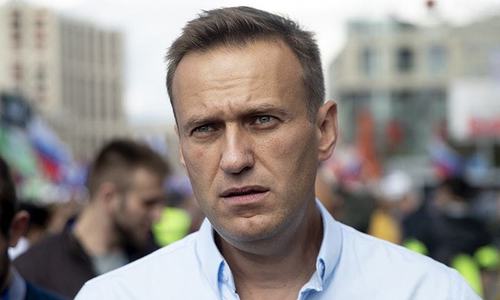
Russian opposition leader and anti-corruption campaigner Navalny fell ill on a flight last month and was treated in a Siberian hospital before being evacuated to Berlin.
Germany said last week there was “unequivocal evidence” that President Vladimir Putin’s top foe had been poisoned using the Soviet-era nerve agent Novichok.
Germany, which holds the rotating presidency of the European Union, will discuss possible sanctions against Russia if the Kremlin does not provide an explanation soon, Foreign Minister Heiko Maas said on Sunday.
Moscow accuses Berlin of delaying investigation
“We have high expectations of the Russian government to solve this serious crime,” Maas told German daily Bild. “If the government has nothing to do with the attack, then it is in its own interest to back this up with facts.”
If Russia does not help clarify what happened “in the coming days”, Germany will be compelled to “discuss a response with our allies,” Maas said.
Any sanctions decided should be “targeted”, he added.
Western leaders and many Russians have expressed horror at what Navalny’s allies say is the first known use of chemical weapons against a high-profile opposition leader on Russian soil.
EU foreign policy chief Josep Borrell last week called on Moscow to cooperate with an international probe into the poisoning and said the 27-nation bloc would not rule out sanctions.
Britain said on Sunday that Russia had “a very serious set of questions to answer” and it was “clear” the Kremlin critic was poisoned with Novichok.
The Kremlin has denied responsibility for the attack and Foreign Minister Sergei Lavrov has said that Germany is yet to share any findings with Moscow’s prosecutors.
Foreign ministry spokeswoman Maria Zakharova on Sunday accused Germany of stalling efforts to probe the case. German authorities had failed to respond to a request by Russian prosecutors sent on August 27, she said in a Facebook post.
“Dear Mr Maas, if the German government is sincere in its statements then it should be interested in preparing a response to a request of the Russian Prosecutor General’s Office as soon as possible,” Zakharova said.
“So far we are not certain that Germany is not playing a double game,” she added. “Where is the ‘urgency’ you are insisting upon?
“By not sending its answer, Berlin is stalling the process of investigation for which it’s calling. On purpose?”
Maas said on Sunday there were “several indications” that Russia was behind the poisoning, in the strongest accusations yet from Germany.
“The deadly substance with which Navalny was poisoned has in the past been found in the hands of Russian authorities.
“Only a small number of people have access to Novichok and this poison was used by Russian secret services in the attack against former agent Sergei Skripal,” he said, referring to a 2018 attack on the former double agent and his daughter in the English city of Salisbury.
On the subject of which sanctions could be discussed by the EU, Maas did not rule out action relating to Nord Stream 2, a multi-billion-euro Russian-German gas pipeline nearing completion that has drawn the ire of US and European partners alike.
“I hope... that the Russians do not force us to change our position on Nord Stream,” Maas said, adding that the consequences of any potential cancellation would also need to be weighed while the debate on sanctions should not be “reduced” to one point.
Published in Dawn, September 7th, 2020