Country’s public debt sustainable, says ministry



ISLAMABAD: The Ministry of Finance on Saturday said the country’s public debt was sustainable and its capacity to repay was also adequate.
In a statement, the ministry said the government planned to run primary surplus, maintain low and stable inflation and promote measures that support higher long-term economic growth.
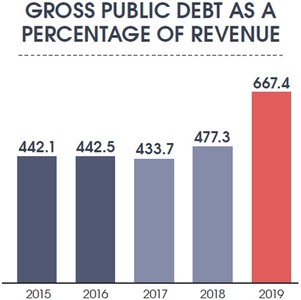
Quoting latest numbers released by the State Bank of Pakistan (SBP), the statement noted that the total public debt-to-GDP ratio had increased from 86.1 per cent in June 2019 to 87.2pc in June 2020.
It is however important to note that this figure had actually gone down to around 84pc in December 2019 which was on the back of strong growth in the Federal Board of Revenue (FBR) taxes and strict control on current expenditure.
The prudent economic policies had resulted in posting of a primary surplus in February, 2020 which was after a gap of many years, the statement said adding that however, the Covid-19 pandemic had adversely impacted the economy and slowed down the reforms programme.
Pakistan’s economy suffered from the pandemic decreasing revenue collection, increasing expenditures, declining domestic and global demand, lower tourism and business travel, trade and production linkages and supply disruptions, etc.
Resultantly, the debt-to-GDP ratio has increased due to a sharp decline in growth and increase in budget deficit primarily due to the pandemic-related expenditures, during last four months of FY20.
It is also pertinent to add that the according to the Global Economic Prospects report published by the World Bank Group in June, Pakistan’s economy has shown greater resilience than its peer in South Asia.
It said the government will be able to bring back the debt-to-GDP ratio on a clear downward path over the medium-term through an increase in revenues and fiscal discipline.
The finance ministry reiterated government plans to run primary surplus, maintain low and stable inflation and promote measures that support higher long-term economic growth.
Published in Dawn, August 30th, 2020