AIDS-related deaths on the rise in Pakistan



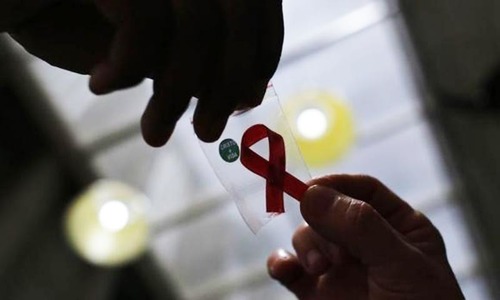
ISLAMABAD: The United Nations Aids Control Programme says AIDS-related deaths are rising in Pakistan as late diagnosis and poor adherence to treatment are missed opportunities to prevent onward transmission and related mortalities.
According to the ‘Global AIDS Update 2020’ published on Tuesday, the UNAIDS says HIV infections in Asia and the Pacific have declined slightly with reductions in Cambodia, Myanmar, Thailand and Vietnam. But it sees sharp increase in infections in Pakistan and the Philippines.
The 29 per cent reduction in AIDS-related deaths since 2010 speaks to successful testing and treatment programmes in several countries, such as Australia, Cambodia and Thailand which have achieved 90-90-90 targets, but AIDS-related mortality rates are rising in Pakistan, Afghanistan and the Philippines.
The report, ‘Seizing the moment’, says needle-syringe programme coverage is low in Pakistan, Indonesia, Malaysia and Thailand, and opioid substitution therapy services are either not available or the coverage is just 10pc or less in Pakistan, Afghanistan, Bangladesh, Nepal, Indonesia and Thailand.
UNAIDS sees sharp rise in HIV infections with low coverage of needle-syringe programme in the country
Key populations and their partners accounted for an estimated 98pc of new HIV infections and more than one quarter of new HIV infections are among young people aged between 15 and 24 years. Rising numbers of new infections among men who have sex with men are a major concern, the report says. It observes that about half of key populations living with HIV are unaware of their HIV status, but assisted testing and self-testing can increase the rate of diagnosis.
An overall slowing in reductions in new HIV infections coincides with a decline in political and programmatic commitment, alongside punitive laws and policies and rising stigma and discrimination that block effective AIDS response, the report explains.
According to the report, a small minority of countries have both high coverage of needle-syringe programmes and moderate coverage of opioid substitution therapy. Evidence indicates increased use of methamphetamine drugs linked to HIV transmission, and there is a need for innovative harm reduction services that respond to changing patterns in drug use. Civil society organisations are widely involved in HIV prevention programmes, but these community-led services are not available at sufficient scale.
The report says the progress has been remarkable globally, but highly unequal, and the global HIV targets set for 2020 will not be achieved. It warns that even the gains made could be lost and progress further stalled if we fail to act. It highlights how urgent it is for the countries to act and reach the millions still left behind.
The world is far behind in preventing new HIV infections. Some 1.7 million people were newly infected with the virus, more than three times the global target. There has been progress in eastern and southern Africa, where new HIV infections have reduced by 38pc since 2010.
However, this is in stark contrast to Eastern Europe and Central Asia, which has seen a staggering 72pc rise in new HIV infections since 2010. New HIV infections have also risen in Latin America by 21pc and in the Middle East and North Africa by 22pc.
The Covid-19 pandemic has seriously impacted the AIDS response and could disrupt it more. A six-month complete disruption in HIV treatment could cause more than 500,000 additional deaths in sub-Saharan Africa over the next year, bringing the region back to 2008 AIDS mortality levels.
Published in Dawn, July 8th, 2020