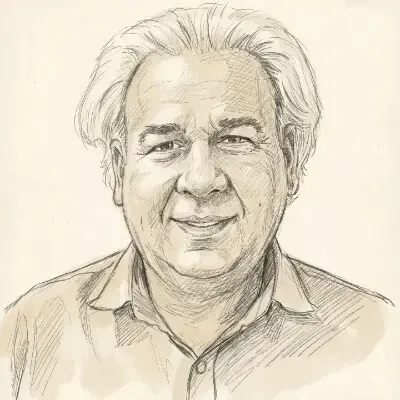
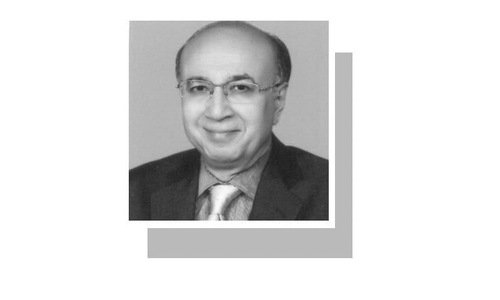
KARACHI: This is a time for a grassroots movement where none of us feel alone. This was one of the points made in a lecture by American author Deepak Chopra, who is known for promoting alternative medicine, at a webinar titled ‘The future of leadership and well-being’, organised by the Aga Khan University on Wednesday evening.
Mr Chopra began his talk by saying that we are in a moment what might be called a crisis: there’s great ideological discord in the US and across the world, religious conflict, terrorism, extinction of species, climate change, mass migration and the Covid-19 pandemic which is literally devastating the well-being of the world. So, humanity needs a new story.
The story humanity has embraced for the last several thousand years has not worked: the story of ethnocentrism, bigotry, prejudice, war, eco-destruction, climate change … it’s not working. The world at the moment is going through a process that can be called grief. Grief happens when the way of living starts to slip away and dies. When people go through grief, they go through certain stages. The first of which is ‘why me?’ The second is anger, hostility and all kinds of grievances. Only some people find acceptance of the situation. Right now we need to find acceptance of the global situation because without it there’s no change.
‘Science can be both divine and diabolical’
Once you have acceptance then there’s a possibility of a creative response. A creative response has to be a grassroots global rewiring of our collective consciousness. The old story is certainly being questioned now. Therefore a new leadership that looks at well-being in all its dimensions is very important.
Mr Chopra said social scientists look at different buckets of compartments. The first is career well-being. On a scale of 1 to 10 how happy are you with your career: if your answer is 10, it will be extraordinarily happy; 8, 9, 10 means you are thriving; if your answer is 5, 6, 7 you are struggling in some area; and if it’s less than five, you are suffering. Similarly one can look at social, physical, financial and community well-being, and the same rule (scale) applies. Also, you need to ask: how’s the quality of your life?
Mr Chopra said based on that there’s a template for future leaders, after which he showed a few slides. He argued we need to manage our well-being physically, spiritually and mentally. There are seven pillars of well-being: 1) sleep; 2) emotions; 3) movement; 4) meditation; 5) nutrition; 6) biological rhythm; 7) self-awareness. If we follow the pillars, 95 per cent of chronic illness can be avoided.
Mr Chopra then talked about the acronym for the word ‘leaders’ of a new model:
1 Look and listen, 2 Emotional bonding, 3 Awareness, 4 Dare to dream a new reality and do it, 5 Empowerment, 6 Responsibility and 7 Synchronicity.
Mr Chopra said good luck is opportunity meeting preparedness. Addressing the Punjabi audience in particular, since he himself is a Punjabi, he mentioned there are three words used in his community: seva (service), simran (remembrance) and sangha (community). If we embark on this, we can actualise the new leadership.
Highlighting how technology has historically developed each time a world crisis has hit us, he said: “I can guarantee you that once the pandemic is over, there will emerge newer technologies which will rewire our global brain.” Summarising his arguments, he remarked: “This is a time for a grassroots movement where none of us feel alone.”
Answering a question after the lecture, Mr Chopra said we are obsessed with science, but science can be both divine and diabolical. It has given us nuclear weapons; science without art is bereft. “When you bring in art, music, poetry, mushairas and remembrance into your life, then you realise that artists are the conscience of the world. Artists speak with a conscience. We need an artistic revolution in the world. Art is the language of our soul. Without art we have no conscience. Watch the political leaders of the world, see their body language. Can they be moved by poetry and music? Because if they can’t, they’ve lost their souls.”
Published in Dawn, June 11th, 2020