IN some respects, Pakistan appears to be moving with the times in dealing with the pandemic.
On Friday, Prime Minister Imran Khan at a press briefing said the country would have to learn to live with the contagion. His words echo those spoken recently by David Nabarro, WHO’s special envoy for Covid-19. The world has come to realise that even the strictest of lockdowns, such as in China and Italy, have not prevented local clusters of Covid-19 from emerging later when even nominally routine life is allowed to resume. And the prospect of a vaccine against the disease, most experts agree, is at least a year away.
While indicating the lifting of the lockdown in the near future, the Pakistani government says that the required SOPs to check uncontrolled transmission of the virus will remain in place. In fact, the federal government, like Sindh and KP earlier, has now declared it mandatory for everyone to wear a mask in public.
However, conspicuously missing in the government’s seemingly reasoned stance is the concept of ‘flattening the curve’, which has been the priority for most countries around the world in their fight against the coronavirus. When the rate of transmission slows (or ‘flattens’ instead of rising), there is less stress on medical services on any given day, and there are more ICU beds and equipment available for those who need them.
This critical turning point prevents health systems from being overwhelmed by a deluge of Covid-19 cases and affords governments breathing space to plan relief operations, etc. And it can only be achieved — as international experience proves — through strict lockdowns. Most nations have waited until that juncture before starting to even ease their lockdowns, let alone lifting them.
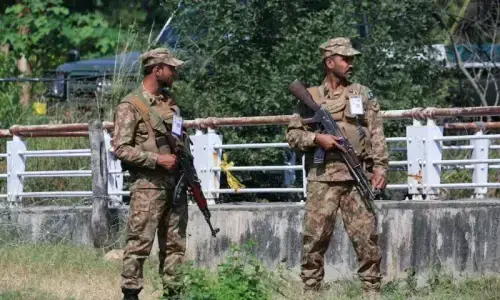
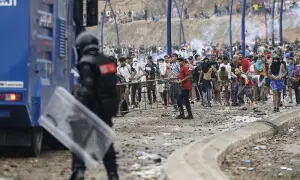
In this country, however, we seem determined to ignore this caveat — which seems eminently foolhardy given what we have seen over the past few days. For, even in the midst of the ‘smart’ lockdown across the country, the Pakistani nation — heedless, inclined to conspiracy theories or divorced from rational thought — has been going about its business as though the coronavirus has either never existed, or has already been successfully eradicated.
People rushed pell-mell to markets the instant they were opened on Monday, and Friday saw religious processions taking place in several cities with nary a thought to social distancing. Even masks were an exception rather than the rule.
The prime minister’s apprehensions about the survival of millions of low-income families are valid, but they do not take into account a very relevant fact. In countries where coronavirus data subsets are being analysed, it is evident that people in the lower socioeconomic strata fall sick and die in far greater numbers than others. The more pragmatic, and perhaps ultimately more humane, course of action may be to institute a strict lockdown at least until infection rates start declining.
Published in Dawn, May 17th, 2020