ADB dedicates $200m to drugs firms to beat virus


ISLAMABAD: The Asian Development Bank (ADB) under its ‘Supply Chain Finance Programme’ has dedicated $200 million to support companies that make and distribute medicines and other items needed to combat coronavirus in the developing member countries of the Bank.
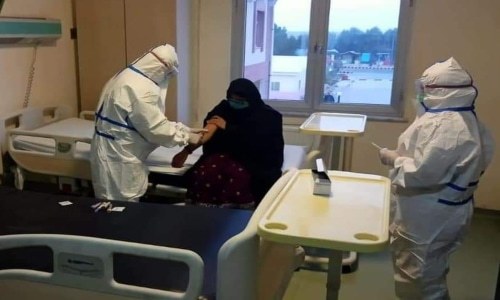
The programme aims to stabilise the supply chain for products such as N95 marks, test kits, gloves, personal protective equipment (PPE) for healthcare providers, ventilators, hygiene items, and other critical goods.
The ADB assistance is targeted at channeling fund to manufacturers, their suppliers, and the distributors of critical goods through post-shipment post-acceptance finance, pre-shipment loans, and distributor financing.
Export bans of key materials have worsened the shortage of face masks in 22 economies, including Pakistan, Bangladesh, Canada, Czech Republic, Egypt, France, Germany, India, Indonesia, Iran, Japan, Jordan, Kazakhstan, Kenya, Malaysia, Poland, China, the Russian Federation, the Republic of Korea, Taipei, Thailand and Ukraine. The export bans are in place in these economies since March 18.
Pakistan among nations that faced shortage of masks due to ban on export
A $800m increase in ADB’s Trade Finance Programme will also be mobilised and along with the increase in capital comes flexibility to support domestic and cross-border trade in times of emergency. The programme is an effective crisis response vehicle because it has strong relationships with many banks, both inside developing Asia and globally, the latter particularly helpful to mobilise co-financing, involving private sector resources to leverage the impact of ADB’s direct support.
An ADB report says that surging demand, partly joined with panic buying, hoarding, and misuse of PPE amid the Covid-19 pandemic, is disrupting global supplies and putting lives at risk. Demand has surged, overwhelming global production capacity.
The dramatic rise in demand for surgical masks, goggles, gloves, and gowns has depleted stockpiles, prompted significant price increases, and led to production backlogs of 4 to 6 months in fulfilling orders.
The most significant challenge is to ensure that critical PPE products are sourced and allocated to frontline health workers and other responders in affected countries, especially those most vulnerable to the spread of coronavirus.
The global market for PPE in the health sector was estimated to be worth $2.5 billion in 2018. Gloves have the highest share of sales revenues at 25 per cent, followed by suits or coveralls at 22pc. Face masks and hats came in third with a share of 14pc.
By region, the United States had the largest market share (33pc), followed by Asia and the Pacific (28pc), and Europe (22pc) in 2018.
The PPE supply chain has not been properly functioning to meet a surge in demand due to the constraints in production and logistics. Prices of PPE products have risen dramatically since the beginning of the Covid-19 outbreak: a six-fold increase for surgical masks; threefold for respirators; and a doubling in the price of gowns.
Among the major sources of the identified backlogs in the production and distribution of PPE, with a focus on face masks, are transport and shipping constraints caused by roadblocks and quarantine measures, and lower availability of transportation and freight containers, hoarding, profiteering, and limited workforce capacity due to illness, also contribute to the shortage.
Published in Dawn, May 10th, 2020