AHMEDABAD: Indian police fired tear gas at a crowd of protesting migrant workers in Gujarat and launched baton charges against hundreds of people queuing at liquor stores in New Delhi, even as the first steps were being taken to relax a coronavirus lockdown.
The world’s largest lockdown, in force since March 25, is slowly being eased in some areas with fewer infections, although it will stay in place at least until May 17, the government said last week.
Although officials say rigid restrictions on work and travel are key to beating the virus, the shutdown has endangered the economic survival of many, including an estimated 140 million migrant labourers banned from going home.
About 1,000 stranded workers seeking help to return to homes in states across India gathered on the outskirts of Gujarat’s city of Surat and threw stones at police who ordered them to disperse, an official said.
“We have detained 80 people so far and are in the process of identifying more,” Surat’s police chief A.M. Muniya told reporters.
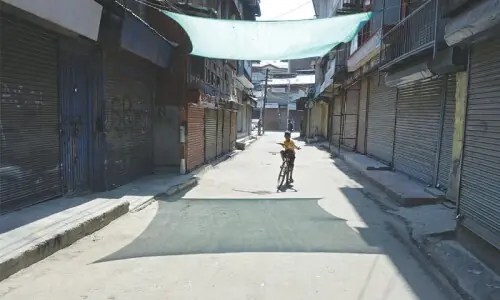
ANI shared a video showing police firing tear gas into a large group of men standing inside a lane lined with shuttered shops. Local television showed images of police entering buildings and homes in the area and detaining people.
In New Delhi, where some offices resumed work on Monday with fewer staff and traffic trickled into the streets, a police official said officers were forced to act after unruly crowds gathered outside liquor stores.
India has so far tallied more than 42,800 cases and 1,300 deaths in a steady rise, and some experts fear that the true figures may be higher in a country of 1.3 billion people where many people have only limited access to health care.
Published in Dawn, May 5th, 2020