2
2
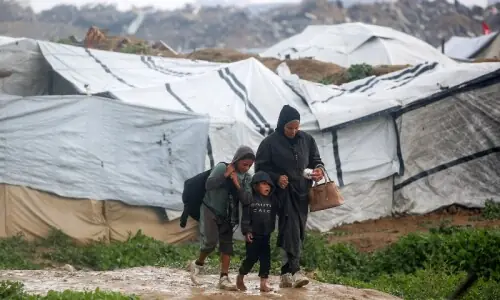
WITH the declaration of self-rule by separatists in southern Yemen — a de facto secession — the situation in the war-torn country is set to deteriorate further. Already Yemen had been battered by five years of conflict, as the Saudi-led intervention on behalf of the government to dislodge the Iran-allied Houthis, who control the capital Sana’a, has turned the poverty-stricken country into a wreck. The Southern Transitional Council has broken away from the Mansour Hadi-led government as it claims the administration was ‘conspiring’ against its cause. The UN’s special envoy for the region has sounded the alarm, indicating the fact that the development bodes ill for the country.
Differences between the southern and northern regions of Yemen are not new and go back decades. In fact, until the 1990 reunification of the country, it was divided into North Yemen and the Marxist South, with its capital at Aden. Even after reunification, things were less than perfect as a number of attempts were made by the southerners to secede, only to be crushed by the late Yemeni strongman Ali Abdullah Saleh. In the current scenario, the Yemeni theatre has become incredibly complicated. While the battle between the Houthis and the Mansour Hadi regime is seen as another front in the contest for regional domination between Saudi Arabia and Iran, the southern secession exposes fissures within allies. While Mansour Hadi is a Saudi protégé, the STC is largely seen as a client of the UAE; both the Saudis and Emiratis are part of the anti-Houthi coalition. This sets the stage for a very ugly war of all against all, unless saner counsel prevails. To add to this incendiary mix, Al Qaeda in the Arabian Peninsula is believed to have a strong base in Yemen, while the country also hosts a ‘province’ of the dreaded Islamic State group. To prevent a descent into total anarchy, the Saudi-led coalition needs to set its own house in order, for if there are rifts within the alliance, the Houthis are unlikely to negotiate with a house divided. Moreover, if factional fighting extends to all of Yemen, the aforementioned terrorist groups will find an opportune moment to pounce and grab more territory. All these scenarios present a terrifying picture for the hungry, sick and battered people of Yemen. Riyadh and Abu Dhabi need to rein in their respective clients, or else a negotiated end to the Yemeni imbroglio anytime soon is unlikely.
Published in Dawn, April 29th, 2020