0
0
When you think of fashion in Pakistan, you inevitably visualise women’s wear. Glittery ghararas may stream into your consciousness or a Mughal-esque angarkha, a well-tailored shalwar kameez or even the bespoke ball gowns worn by high-flying actresses at local red carpet ceremonies. Rarely does the mind flit to menswear.
While Pakistani fashion may have mushroomed into some sort of a behemoth, the fact remains that menswear only occupies a fraction of its market. And so, women’s wear perpetually remains in the spotlight while men’s clothing simpers behind, the oft-ignored stepchild, relegated to a forgettable slot at fashion week or only managing to make an occasional impression on social media.
This isn’t because there is a dearth of menswear designers in the country but, rather, because very few of them are good at what they do. Most contenders in the field have a penchant for gaudy embroideries, shiny unwieldy fabric and badly fitted silhouettes. Many are fixated with Bollywood and are prone to churn out multi-coloured concoctions a la Shah Rukh Khan in a Karan Johar movie. Men wanting to dress well — or even look decent — don’t have too many local options available to them.
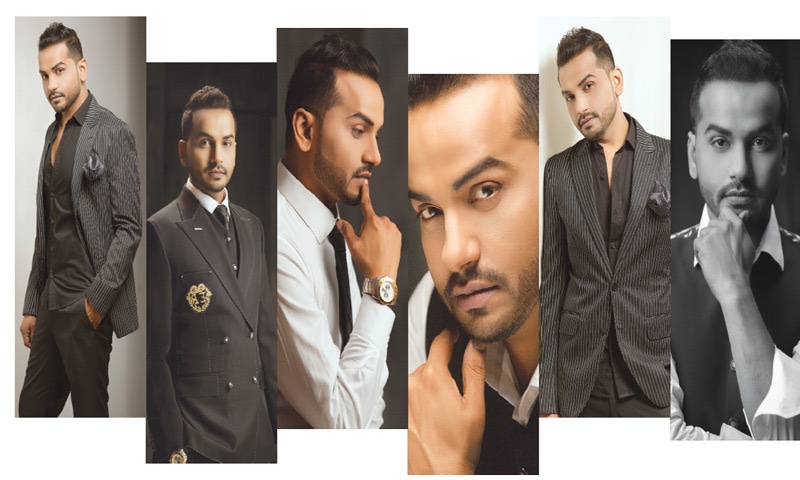
And yet, there are options. A smattering of veteran labels are longtime favourites among men of class and, very occasionally, new designers make their mark. Emraan Rajput belongs to this latter category. He made his debut, fumbled with a few hit-and-miss lines, but persevered and worked the grind and, finally, developed a signature of his own. His designer portfolio today is dotted with some very classy imagery.
Starting small then growing big, Emraan Rajput’s decade-long journey as a menswear designer may have hit a few bumps on the road in the past. But he is testament to the fruits of perseverance and hard work
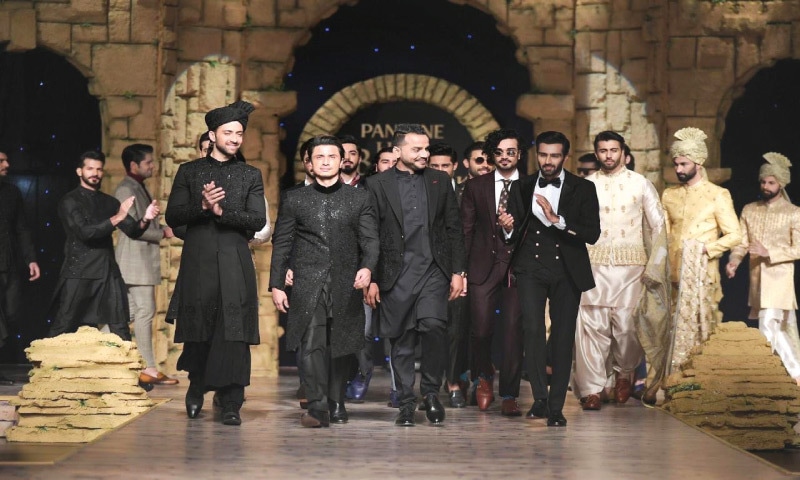
There are his recent fashion shoots — often featuring celebrities — showcasing menswear in subtle colours. There are his recent catwalk shows — ‘Marquis’ at the Hum Showcase last year, where he presented an all-white range of well-cut suits, and ‘Shalima’ at the Hum Bridal Couture Week (HBCW) with its tone-on-tone embellishment on sherwanis and refined suiting. There are his collaborations with a colossal number of mainstream actors, who opt to wear his suits on the red carpet, in TV appearances or even when they are attending star-studded weddings. Having just wrapped up a decade in the business of Pakistani fashion, Emraan’s achieved quite a few milestones.
Marketing a la menswear
I make this observation out loud to him when we begin talking, and ask him what he thinks has particularly spurred on his career? His answer is forthright and not surprising: “Celebrities,” he says. “For my very first show, I approached actor Faysal Quraishi through a common friend. I wanted him to be the showstopper for my show but I could not afford to pay him the fee that he quoted. I told him that I was an up-and-coming designer and really needed his support, and he decided to walk for me anyway. The pictures of him in my show went completely viral, and queries and orders began to come.
“At the same time, Faysal really liked the fit of my designs and began to wear my clothes very frequently. He was working in a morning show at the time and, for an entire year, I was enlisted to design his wardrobe.”
Emraan continues, “Faysal recommended me to other people and, soon, I was dressing more stars, aligning with more TV productions. I continue to do so now.”
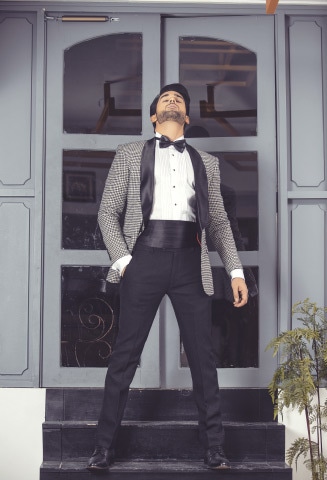
Is this why most of his fashion shoots feature celebrities rather than models? “The country’s best-looking model could wear a design and, yet, people will notice it more if they see their favourite TV actor wearing it,” Emraan says simply. “My work with production houses is often at a discount, but I have never regretted it. When an actor wears my design, uploads a picture of himself on social media and tags my brand in it, it automatically builds hype for me. Customers come to my store with these pictures, asking us to stitch the designs precisely the same way for them. They also assume that a brand endorsed frequently by celebrities will adhere to better quality and stitching standards.”
My work with production houses is often at a discount, but I have never regretted it. When an actor wears my design, uploads a picture of himself on social media and tags my brand in it, it automatically builds hype for me. Customers come to my store with these pictures, asking us to stitch the designs precisely the same way for them.”
Another factor that has been instrumental in building his career is the very market-savvy HBCW omnibus. “My very first show was in Lahore with the Pakistan Fashion Design Council and I have also showcased in Fashion Pakistan Week and Hum Showcase in Karachi,” says Emraan, “but no show draws attention the way HBCW does. The show is constantly aired on the Hum Network’s TV channels around the world, during long weekends and festive occasions. People often tell me, out of the blue, that they saw one of my fashion shows the previous night. I have done five shows with HBCW so far and orders have always kept coming in, consistently.”
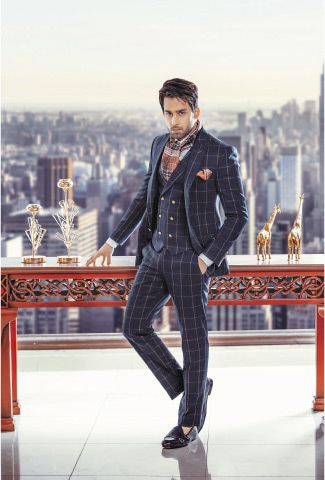
Nevertheless, does he not feel that council-led fashion weeks are also significant, helping build his clout and bringing in critical acclaim? “Yes, all fashion shows are important. Ultimately, my focus is on building business and to cater to the masses.”
Emraan has managed to be noticed in an arena which has long been dominated by a few veteran names. Was he inspired by any particular designers when he first started out? “I remember being fascinated by Rizwan Beyg’s collection at the Carnival de Couture. I also really admire Umar Sayeed’s detailings,” he says. “To date, I joke with Rizwan Beyg that I want to steal his embroidery patterns!”
Learning the ropes
From admiring Rizwan Beyg’s work from a distance to joking with him, Emraan certainly has come far. However, I do recall a not-too-long-ago time when he still seemed to be deciphering his personal ethos, sometimes delivering well-conceived collections but, at other times, downsliding towards an overwhelming whirl of embroidery, colour and bling. “I have had my fair share of bad reviews,” he agrees, “but I kept struggling on. I procure quality, imported fabric and I’m very particular about stitching. Getting the right fit is extremely important in menswear, and I pay a lot of attention to it.”
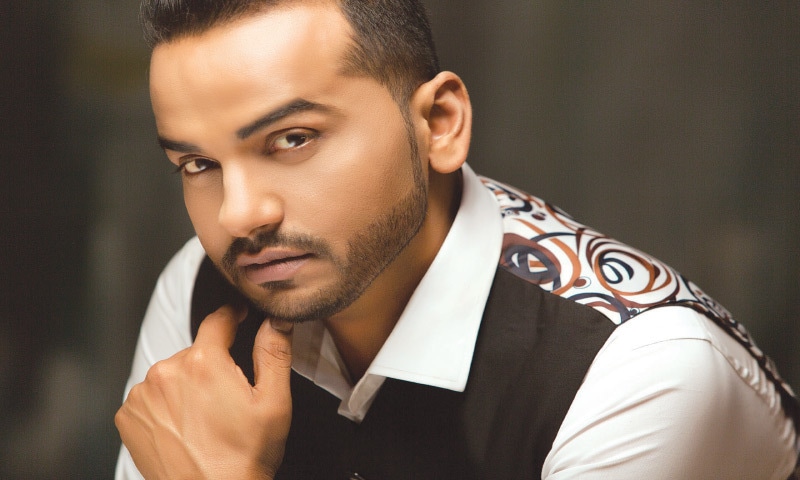
He speaks like a pro and yet, he hasn’t studied design. This is not an anomaly in Pakistan’s fashion industry, however, where some of the country’s most established names are self-taught. How did Emraan teach himself the intricacies of men’s fashion?
“I always had a knack for getting the right silhouette stitched for myself and I think that helped,” he muses. “I also learnt as my business grew. During the initial years of my career, I purchased a very expensive suit while I was in London. I opened it up and examined it, the way it was stitched, the materials used, even the placement of the pockets. I self-taught myself on how to perfect the fit of a suit. I still have that suit with me, as a memento!”
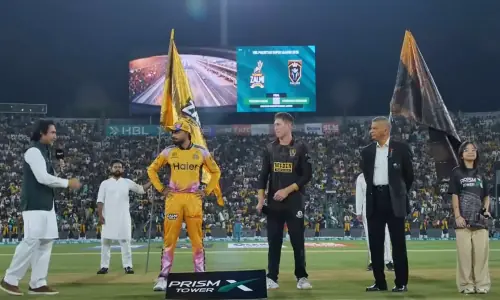
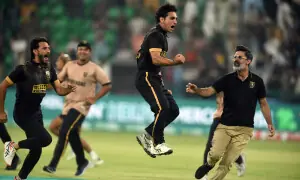
The personal training course worked: Emraan is a popular choice for men’s suiting and his clients include sports analyst Dr Kashif Ansari, who purchases suits regularly from him when he visits Pakistan from the US. As an adviser for the Peshawar Zalmi team in this year’s PSL tournament, Dr Kashif enlisted Emraan to create kurta shalwars and waistcoats for some of the visiting West Indian cricketers. The images, rolled out on social media while PSL fever was at its height, were a huge hit.
I have had my fair share of bad reviews but I kept struggling on. I procure quality, imported fabric and I’m very particular about stitching. Getting the right fit is extremely important in menswear, and I pay a lot of attention to it.”
“It was something that just happened without me having to plan it out,” says Emraan modestly. “But yes, it worked really well.”
Menswear in coronavirus times
Nevertheless, the most intuitive marketing in the world can’t haul in huge sales for a designer business while the world is in the grips of the Covid-19 pandemic. With his store shut down and online deliveries having slowed, how is business faring for Emraan? “Business is suffering and, realistically, I know that it will continue to do so,” he confesses. “Under normal circumstances, sales are very high at this time. People are buying multiple clothes — for iftar parties, taraweeh prayers, Eid, weddings right after Eid. But with social distancing being recommended, there won’t be many parties to go to. Buying power will also be low. People who buy 10 suits may just buy one or two.”

But weddings will still happen, I point out. “Yes, and I hope that that is what will help us cope. Even at a small, coronavirus-compliant affair, the groom and his family will want to dress well. They will want to spend on a brand that they trust and admire.”
Does he feel that, with the economy suffering, his customers may end up going to less prestigious but more affordable brands? “I think my particular customers are very discerning. I have never had a sale in my store and yet, I have always sold well. Even now, these people will come to me. The problem with menswear in Pakistan is that everyone thinks that it’s easy to make, that it just involves the stitching of a basic kurta shalwar.
“There is so much more to it. Over the past 10 years, I have learnt the intricacies of what makes menswear work, how to design for customers who have a preference for quality and are willing to pay a certain amount for it.”
He has learnt well; weathering the initial bad reviews and, later, basking in the good without letting it go to his head; dressing a single celebrity before extending on to a veritable galaxy of Pakistani actors; building his market; starting small and then, growing big.
Emerging as a great choice for local menswear, Emraan Rajput is testament for other designers that, should they persevere and have a knack for design, they too can make it big. And I do hope that he continues to set this example, the coronavirus pandemic notwithstanding.
Published in Dawn, ICON, April 26th, 2020