Broad money jumps by 8.6pc



KARACHI: While trade and industry is badly hit amid the ongoing lockdown, monetary expansion witnessed a sharp increase of 8.59 per cent over end of FY19 level, suggesting that liquidity is being pumped mostly for non-productive areas.
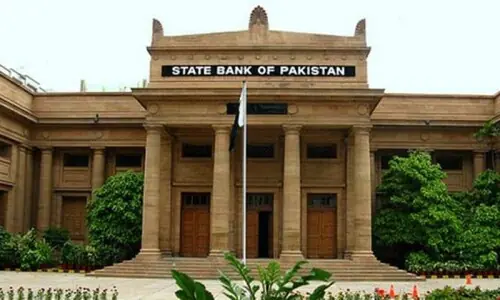
According to data released by the State Bank of Pakistan (SBP) on Monday, a total of Rs1,529bn of broad money (M2) was added to the economy as of April 3.
The government borrowed Rs1,081bn for budgetary support during July to April 3, higher by 28.54pc or Rs231.915bn over Rs841bn in the same period of last fiscal year.
The entire liquidity need was met by the scheduled banks, from whom the government borrowed Rs1,484bn, as opposed to net retirement of Rs2,659bn in corresponding period of the previous year.
On the other hand, Rs402.346bn was retired to the SBP, compared to borrowing of Rs3,500bn in same period last year.
Both the net foreign and domestic assets of the banking system were positive with the former coming in at Rs771bn during July-April 3, as compared to net retirement of Rs673bn in same period of last fiscal year.
Meanwhile, the net domestic assets were down to Rs775bn, from Rs1,347bn in the same period of last fiscal, suggesting that the government has stopped borrowing from the SBP.
All of this combined raised the total broad money (M2) by 8.59pc over the end of FY19 figure, as against a growth of 4.22pc in the same period of last fiscal year.
Since a big chunk of trade and industry activities are at a standstill, this higher liquidity growth explains the government’s spending to fight against the Covid-19 spread and provide relief to the population.
With brorrowing a significant increase and revenues expected to slow down, the government is bracing for a high fiscal deficit, which the World Bank estimates could be as high as 9.5pc by the end of this fiscal year.
Published in Dawn, April 14th, 2020