Virus leaves 30,000 dead in Europe alone


PARIS: The coronavirus pandemic has claimed more than 30,000 lives in Europe alone, a global tally showed on Wednesday, in what the head of the United Nations described as humanity’s worst crisis since World War II.
Italy and Spain bore the brunt of the crisis, accounting for three in every four deaths on the continent, as the grim tally hit another milestone even though half of the planet’s population is already under some form of lockdown in a battle to halt the contagion.
Spain reported a record 864 deaths in 24 hours, pushing the country’s number of fatalities past 9,000. The toll is only surpassed by Italy’s, where the virus has killed nearly 12,500 people.
Britain recorded its biggest day-on-day jump in the number of deaths, with 2,352 people having succumbed to the disease.
Since emerging in China in December, Covid-19 has spread across the globe, claiming over 43,000 lives and infecting more than 860,000 people, according to a tally.
President Donald Trump has warned of a “very, very painful two weeks” as the United States registered its deadliest 24 hours of what he called a “plague”.
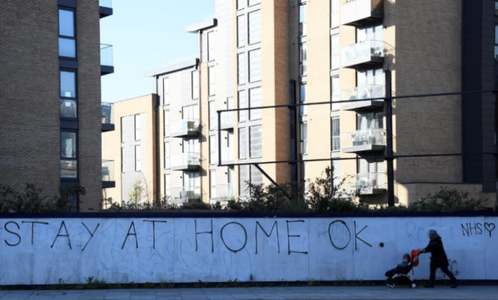
In a scramble to halt the contagion, governments have shut schools, most shops, and ordered millions of people to work from home. Cancellations of key events on the global calendar have swept both the sports and cultural worlds, with the Wimbledon Grand Slam tournament and the Edinburgh arts festival the latest to be scrapped.
For UN Secretary-General Antonio Guterres, the extraordinary upheaval spurred by the virus presents a real danger to the relative peace the world has seen over the last few decades.
The disease “represents a threat to everybody in the world and... an economic impact that will bring a recession that probably has no parallel in the recent past,” he said.
“The combination of the two facts and the risk that it contributes to enhanced instability, enhanced unrest, and enhanced conflict are things that make us believe that this is the most challenging crisis we have faced since the Second World War.”
Economic desperation
With most business activity grinding to a halt for an undetermined period of time, scenes of economic desperation and unrest were emerging across the globe. In Italy, queues were lengthening at soup kitchens while some supermarkets were reportedly pillaged.
Half a million more people now need help to afford meals, Italy’s biggest union for the agriculture sector Coldiretti said, adding to the 2.7 million already in need last year.
“Usually we serve 152,525 people. But now we’ve 70,000 more requests,” confirmed Roberto Tuorto, who runs a food aid association.
The economic pain of lockdowns is especially acute in poorer nations.
In Tunisia several hundred protested a week-old lockdown that has disproportionately hit the poor. “Never mind coronavirus, we’re going to die anyway! Let us work!” shouted one protester in the demonstration on the outskirts of the capital Tunis.
Africa’s biggest city Lagos was just into its second full day of lockdown on Wednesday — but with some of the world’s biggest slums, containment will be a challenge.
Dwellers of South Africa’s townships say it is simply impossible to stay at home despite a 21-day lockdown ordered last week.
“We don’t have toilets... we don’t have water so you must go out,” said Irene Tsetse, 55, who shares a one-bedroom shack in Khayelitsha township with her son.
Wary of a collapse of the world’s economy, the globe’s leading central bankers have pumped billions in liquidity into the system.
Last week, G20 leaders in turn said they were injecting $5 trillion into the global economy to head off a feared deep recession. But with the spread of the virus far from abating, key indexes fell again in major markets.
In the European Union, the terms of a rescue plan threatened to divide the bloc.
Worst-hit Italy and Spain are leading a push for a shared debt instrument — dubbed “coronabonds”, but talk of joint debt is a red line for Germany and other northern countries.
The economic cost of the crisis was still piling up as lockdowns remained at the forefront of official disease-stopping arsenals — a strategy increasingly borne out by science. So, Germany extended to April 19 bans on gatherings of more than two people outdoors and other restrictions on public life.
Published in Dawn, April 2nd, 2020