TOKYO: Global giant India joined the countries ordering their citizens to stay at home on Tuesday, putting a third of the world on lockdown as the coronavirus epidemic forced Japan to postpone the Olympics.
Despite warning signals from the United States and Europe that the unprecedented shutdown is pushing the economy towards collapse, more governments are opting not to risk allowing potential virus-carriers to go out and about.
And just as China, where the new strain emerged last year, began to loosen some restrictions, neighbouring India ordered its 1.3 billion people — the world’s second biggest population — to stay at home for all but essential business.
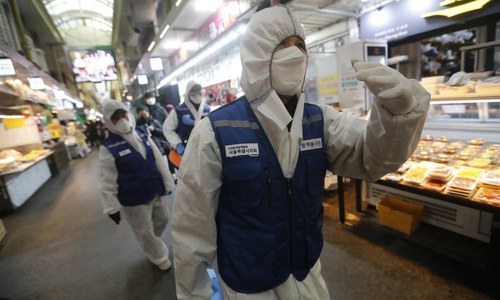
Prime Minister Narendra Modi’s “total lockdown” call doubled the number of people around the globe under some form of movement restriction to slow the spread of the virus to more than 2.6 billion people.
Harsh measures in Italy bearing fruit as daily death toll falls slightly
“To save India, to save its every citizen, you, your family... every street, every neighbourhood is being put under lockdown,” Modi said, announcing this would go into effect at midnight, Delhi time.
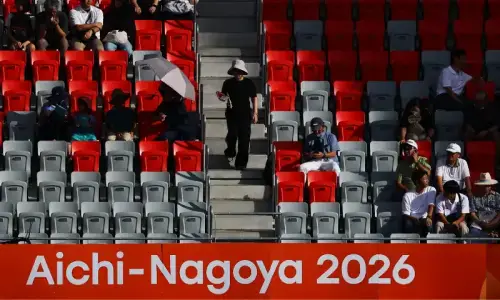
Mod spoke as the epidemic continued to ravage the global economy and cut a swathe through the world’s sporting, cultural and social agenda, forcing the Tokyo 2020 Olympics to be pushed back to next year.
Japanese Prime Minister Shinzo Abe tried to sound an optimistic note, vowing the delayed sporting extravaganza would be “a testament to mankind’s defeat of the new virus”.
Across the planet, the grim Covid-19 toll continued to mount, with close to 17,000 fatalities and almost 390,000 declared infections — including more than 200,000 in Europe alone.There was perhaps also a glimmer of hope in Italy, the European ground zero of Covid-19, with officials saying — cautiously — that its punishing lockdown may be bearing fruit.
Its daily death toll fell slightly, although cumulatively the country has recorded more than 6,000 fatalities, exceeding even China.
But there was less confidence elsewhere in the world, and Britain, New Zealand and South Africa declaring countrywide shutdowns in a bid to stem new infections.
Egypt announced a nighttime curfew for two weeks while Ireland ordered all non-essential businesses to be shut.
In Britain, where Prime Minister Boris Johnson on Monday bowed to pressure to shut shops and services, the government said it would be opening a 4,000-bed virus field hospital.
The extraordinary measures being imposed around the world have radically altered daily life and have also thrown up up horrifying tales.Younger people have been warned not ot visit elderly lowed ones to avoid spreading the virus to the most vulnerable, but “ticking time bombs”.
“It’s very hard for the families not knowing what’s happening inside,” admitted Pauline, a teacher whose mother is living in an elderly care home in Paris where the virus has been detected.
Another vulnerable site for infections are cruise ships, and Chile has become the latest country to prevent one — the Dutch-flagged Zaandam with 1,800 people on board — from docking.
Chile is concerned that 42 of those on board with flu symptoms might be carrying Covid-19 coronavirus, but previous experience with a ship off Japan has shown the disease spreads quickly among trapped passengers.
The financial impact of economies grinding to a halt continued to unnerve policymakers, who have opened the spigots and flooded the markets with yet more cash to keep the wheels turning.
On Tuesday, G7 finance ministers and central bank chiefs vowed to “do whatever is necessary to restore confidence and economic growth and to protect jobs, businesses, and the resilience of the financial system”.
In the United States, the Federal Reserve has unveiled an unprecedented bond-buying programme, in a move not seen since the global financial crisis more than a decade ago.
Europe has taken similar measures — and finance ministers were meeting on Tuesday to coordinate a bigger response — but economists say the lockdowns have already damaged business.
A closely-followed PMI survey by analysts IHS Market showed a collapse in economic activity in the eurozone “far exceeding that seen even at the height of the global financial crisis”.
Published in Dawn, March 25th, 2020