0
0

THIS is apropos the story ‘Proposed national curriculum ignores mother languages’ (Jan 20). As a native speaker of a critically endangered language, Wakhi — the language of the people of Wakhan — I have experienced, firsthand, the impact of a state ignoring the language of smaller community.
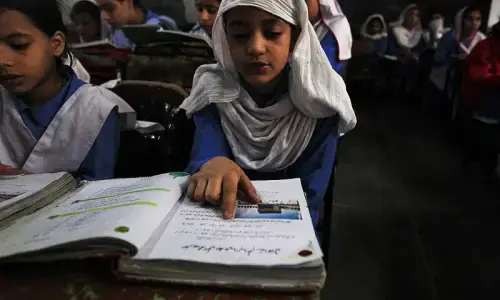
While we, Wakhi speakers, were taught Urdu and English since early ages, our mother tongue was never considered worthy enough of inclusion in the curriculum. This came at a cost, with many people looking down at their mother language, or not seeing any value in learning or teaching it in a systematic manner.
It goes without saying that the same fate is shared by speakers of other languages like Burushaski, Shina, Balti, Khowar, Torwali, or Domaaki, to name a few.
It is tragic that during the last seven decades no government has ever tried to introduce our language as a subject, or even a chapter about language, in the curriculum. The result of this exclusionist attitude is apparent in many of our languages being declared critically endangered by UNESCO.
Today, we are unable to transfer our local language and heritage to our children in a systematic manner, because such arrangements don’t exist, owing to lack of government patronage.
The present government came with the slogan of ‘change’, but it seems that the attitude towards smaller language communities is the same. It appears that our diversity is being scuttled in the name of homogenisation and nation-building.
The Gilgit-Baltistan and the federal governments should stop treating our languages as pariahs. Our languages have existed for thousands of years, and we are proud of language and our heritage.
Noor Pamiri New York, USA
Published in Dawn, February 7th, 2020