Chemical warfare watchdog hits back at Syria report doubters


THE HAGUE: The head of the world’s chemical weapons watchdog on Monday defended a report into an alleged chlorine attack in Syria, despite allegations of a cover-up by a whistleblower.
Wikileaks published an email from a member of the team that investigated the attack in the town of Douma in April 2018, which accused the body of altering the original findings of investigators to make evidence of a chemical attack seem more conclusive.
Russia and its allies have seized on the email and an earlier document which both question the conclusion by the Organisation for the Prohibition of Chemical Weapons (OPCW) in March 2019 that chlorine was used in Douma.
The row added to tensions at the OPCW’s annual meeting in The Hague over a new team that will shortly name culprits for attacks in Syria for the first time.
“It is in the nature of any thorough inquiry for individuals in a team to express subjective views,” OPCW Director General Fernando Arias told member countries.
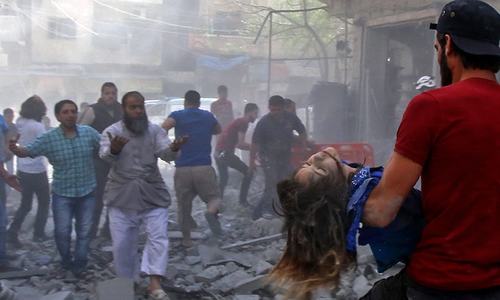
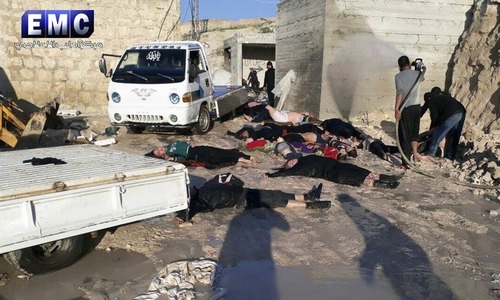
“While some of these diverse views continue to circulate in some public discussion forums, I would like to reiterate that I stand by the independent, professional conclusion” of the probe. First responders said 40 people were killed in Douma.
Britain, France and the United States unleashed missile attacks on suspected chemical weapons facilities run by President Bashar al-Assad’s regime after the attack.
Russia and Syria have alleged that the incident was staged to provide a pretext for Western military action.
The leaked email by an investigator going by the alias “Alex” and quoted by Wikileaks expresses the “gravest concern”, saying the OPCW report “misrepresents the facts” and contains “unintended bias.” The email, written in 2018, says the OPCW report changed the language on the levels of chlorine allegedly found compared to what investigators originally wrote, to make it appear that the presence of the chemical was more conclusive than it was.
It also focuses on whether or not the chemical came from barrels found at the scene, and whether those barrels had been dropped from the air — which would indicate Assad’s forces — or placed manually there — which would indicate it was staged by Syrian rebels.
The OPCW earlier this year launched an internal investigation into the leak of another document by a member of the Douma team raising similar concerns.
Syria agreed to hand over its chemical arsenal in 2013 to avoid US and French air strikes in retaliation for a suspected sarin attack that killed 1,400 people in the Damascus suburb of Ghouta. But the OPCW says there have been further attacks since then.
Despite opposition from Syria and its allies, OPCW states voted in 2018 to give the organisation new powers to pin blame on culprits for the use of toxic arms.
Details of the Douma incident have been passed to a new team set up to name the perpetrators, Arias said.
Moscow and its allies are now threatening to block next year’s OPCW budget if it includes funding for the team, which could effectively shut down the watchdog.
China’s ambassador to the OPCW Xu Hong said the new identification team risked turning the watchdog into a “political tool”.
Published in Dawn, November 26th, 2019