Bits of Berlin Wall make global art, memory


 2
2


BERLIN: For nearly three decades, the Berlin Wall encircled West Berlin, built by communist East German authorities ostensibly to protect the country from “fascists,” but in reality to prevent their own citizens from fleeing into the democratic half of the divided city, a portal to the rest of the free world.
For a barrier meant to prevent travel, chips, chunks and full segments of the 156.4 kilometer (97.2 mile) -long reinforced concrete Berlin Wall have done a pretty good job themselves getting around Germany and the rest of the world in the past 30 years.
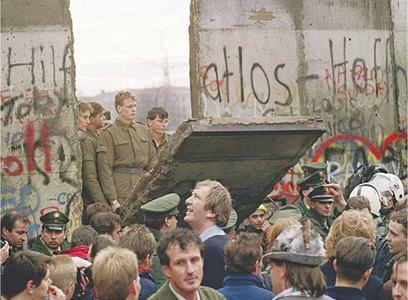
The Berlin Wall divided the city from 1961 until it was first opened on Nov 9, 1989 , though it took much longer to be removed entirely. In Berlin today , some symbolic segments still stand in their original locations, left in place as a reminder of what was known as the front line of the Cold War, a daily physical reminder of the metaphorical Iron Curtain between eastern and western Europe during those tense times.
As jubilant Germans tore at the Berlin Wall in 1989, many pocketed small pieces to take with them, and small stands were set up almost immediately by the more enterprising to sell larger chunks as souvenirs. Today, bits of unknown provenance are still for sale in tourist shops in the German capital.
Larger slabs have been purchased or given to display in museums, embassies, schools, parks, memorials and in other locations around the world.
Today, visitors to Paris can see a piece of the Berlin Wall outside the Porte de Versailles metro station, while another stretch is on display in the La Defense business district outside the city.
Outside the European Commission’s headquarters in Brussels a slab decorated with the image of former President John F. Kennedy greets visitors, complete with an information panel detailing its significance.
Near the Cheonggye stream in Seoul, South Korea, a sculpture of a bear a symbol of Berlin and painted with the German capital’s landmark Brandenburg Gate stands in front of three sections.
The Roman Catholic shrine of Fatima in Fatima, Portugal, has a slab on display behind glass, and another piece is prominently featured in the courtyard of Costa Rica’s Chancellery, or foreign ministry, in San Jose.
In a somewhat odd tribute in the US, Las Vegas’ Main Street Station’s men’s room has urinals mounted on chunks of the Berlin Wall, perhaps intended as a paean to freedom. A glass covering protects the concrete from splash damage.
In New York, two slabs with a colorful painting by French artist Thierry Noir are located in Kowsky Plaza in Battery Park. Elsewhere in the city, in the sculpture garden of the United Nations headquarters, three segments are painted with an image of two people embracing over the wall and the words “trophy of civil rights.” When they were gifted by Germany in 2002, then Secretary-General Kofi Annan said the Wall had been “an offense to the human spirits.”
“It not only marked the division of Germany and Europe, but also expressed, in a uniquely horrible way, the propensity of human beings to erect walls and borders, and then glare across them, hearts filled with hate, minds full of fear and distrust, all the while numb to the notion that there might be a better way,” Annan said.
Published in Dawn, November 6th, 2019