IHC dismisses petition seeking ban on Fazl, JUI-F

ISLAMABAD: The Jamiat Ulema-i-Islam (JUI-F) on Wednesday got some respite as the Islamabad High Court not only granted bail to its leader Akram Khan Durrani till Nov 4 but also dismissed a petition seeking a ban on the party.
Mr Durrani is facing three inquiries by the National Accountability Bureau and as per his pre-arrest bail petition, NAB is after him because he is the main organiser of JUI-F’s ‘Azadi March’ scheduled for Oct 27.
The bail order enabled the JUI-F leader to make arrangements for the march.
NAB is investigating Mr Durrani in connection with alleged corruption in two housing projects of the Federal Government Housing Foundation, appointments of blue-eyed officers in the Pakistan Housing Authority Foundation and the Pakistan Public Works Department and allotment of ‘out-of-turn’ plots for mosques.
An IHC division bench comprising Chief Justice Athar Minallah and Justice Miangul Hassan Aurangzeb at the outset allowed pre-arrest interim bail to Mr Durrani against Rs500,000 surety bonds.
The same bench also granted interim bail to Mr Durrani’s son Zahid, son-in-law Irfan Ullah and former personal secretary Mohammad Tahir.
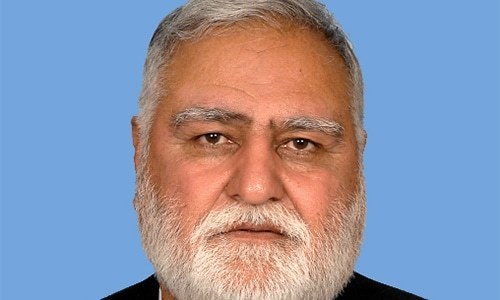
Party leader Akram Durrani granted bail in NAB inquiries
After the court’s proceedings, Mr Durrani told reporters said that the Rehbar Committee comprising representatives of major opposition parties had asked the government to give them permission for holding ‘Azadi March’ if it was serious in negotiations.
The government responded by allowing the JUI-F to hold protest within the parameters defined by the superior courts.
The JUI-F leader said that the government’s move of holding individual meetings with key opposition leaders would not succeed as the Rehbar Committee had already decided that instead of individual meetings, the government must contact the committee.
Mr Durrani said that he did not contact any government functionary, but in fact National Assembly Speaker Asad Qaiser, Senate Chairman Sadiq Sanjrani and Defence Minister Pervaiz Khattak had contacted him over phone.
“Why should I call, I am not in panic; it is the government which is anxious to talk,” he claimed.
He said that the people were now fed up with the Pakistan Tehreek-i-Insaf government as it had failed to provide any relief to the common man.
He said that doctors, engineers, traders, lawyers and other professionals had gone on strike against the government’s unfriendly policies.
Also on Wednesday, Chief Justice Athar Minallah dismissed a petition seeking a ban on the JUI-F and its chief Maulana Fazlur Rehman for passing derogatory remarks against the army.
Justice Minallah termed the petition “frivolous” and said that the government should encourage criticism as it was vital for accountability of powerful segments of society.
The court observed that “free exchange of ideas and information is the premise on which the democratic structure is established and sustains”. However, it added that “this right is not absolute and it’s subject to reasonable restrictions. The guidelines for imposing reasonable restrictions have been provided in Article 19 of the Constitution”.
The court observed that the petitioner did not attach any documents in support of the assertion which were vague in nature.
Justice Minallah remarked that the court did not expect from a political leader to make any irresponsible statement which was tantamount to scandalising an institution or to bring it into disrepute.
The court noted that the Pakistan Electronic Media Regulatory Authority was vested with powers and jurisdiction to take appropriate action in accordance with the law against the violation of reasonable restrictions imposed by law and highlighted in Article 19 of the Constitution.
“This petition in its present form is definitely frivolous and is thus accordingly dismissed,” the court declared.
Published in Dawn, October 24th, 2019