Plea against Fazl’s ‘Azadi March’: Political protests can’t be controlled through judicial orders: LHC


LAHORE: The Lahore High Court on Tuesday observed that political protests and sit-ins were part of a democratic system and such activities could not be controlled through judicial orders.
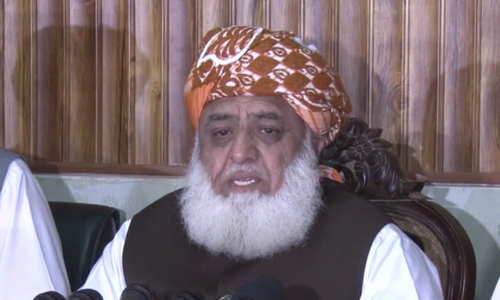
Hearing a petition against establishment of private force (Ansar-ul-Islam) by Jamiat Ulema-i-Islam (JUI-F) chief Maulana Fazlur Rehman and the announced “Azadi March”, Justice Muhammad Ameer Bhatti further observed that political parties were supposed to hold protests and it was the job of government to deal with such activities.
The judge asked the petitioner’s counsel under what law the court could order the government to stop people from participating in the protest or sit-in in question.
Advocate Nadeem Sarwar, the counsel, argued that the protest announced by the JUI-F was aimed at ousting an elected government, which he said was an “unconstitutional act”.
“The governments are not ousted through a long march or political sloganeering,” Justice Bhatti observed, referring to months long protests held in the past.
“Whether courts restrained any sit-in in the past,” the judge asked the lawyer and reminded him that the court would not pass any order that was impractical.
Deputy Attorney General Israr Elahi opposed the petition and said the government would deal with the protesters as per the law.
The judge further observed that the petitioner approached the court on mere apprehensions.
The judge adjourned the hearing till Oct 29 and directed the law officer to come up with instructions from the government.
The petition moved by a citizen submitted that no private organisation was allowed to function as a military organisation as it was an offence under Private Military Organisations (Abolition and Prohibition) Act, 1974.
It further said Maulana Fazlur Rehman was using innocent children of religious seminaries for his political motives against the government. It said the respondent party had also been spreading hatred against a democratically elected government through provocative speeches, which could cause chaos in the country.
The petition pleaded that the dharna (sit-in) announced by the respondent was also a violation of the fundamental rights of the citizens, including the rights to representation, to life and to free movement.
It asked the court to declare that creation of a “private army” was unconstitutional and direct the federal government to take stern action under the law against the respondent party and its chief.
It urged the court to enforce right to political justice and restrain the respondent from holding the march and sit-in at Islamabad as being unconstitutional, undemocratic and bar him from using students of the seminaries. It also sought a direction for the government to initiate process for legislation to regulate sit-ins and protests.
Published in Dawn, October 23rd, 2019