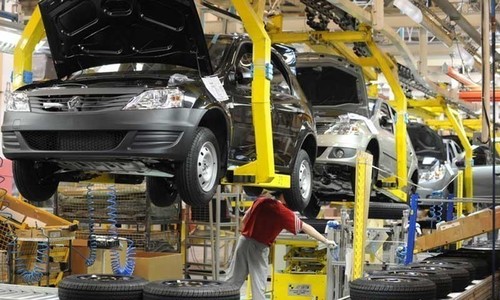
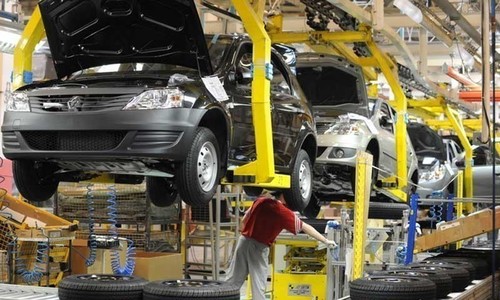
Thousands of workers sent home amid plummeting sales, claim auto vendors


KARACHI: Vendors have shown exit doors to thousands of daily wage workers, outsource employees and contractual workers from July until date following massive decline in sales in the overall auto sector.
Pakistan Association of Automobile Parts and Accessories Manufacturer (Paapam) Chairman Capt (retd) Mohammad Akram told Dawn on Saturday that he had received feedback from association’s 400 members across the country regarding layoffs of around 40,000 people in view of the steep fall in parts procurement by the car and other auto assemblers after massive sales drop.
He said there are around 1,500-2,000 other small and medium-size vendors who supply parts to the aftermarket. “I think they are not hit hard as aftermarket is going quite strong. We [Paapam’s] 400 vendors supply parts to the auto assemblers exclusively.
“I see more joblessness in case the sales slowdown continues in the next two to three months,” Akram feared while adding that the axe may also fall on permanent workers in the next phase of layoffs. He said the 1QFY20 had already ended in red for the entire auto sector while sales are likely to remain depressed until December.
On rising vehicle prices — especially cars, he cited low localisation in vehicles as one the main reasons. “What assemblers claim of achieving high localisation is wrong, I can prove it,” he said while adding that higher localisation would definitely have averted frequent increase in prices of cars on falling rupee against the dollar.
Akram also complained that assemblers have been persistently increasing vehicle prices but they hesitate in passing on price increase to vendors for parts procurement.
Former Paapam chairman Munir Bana said he had fired up to 300 employees (daily wage workers, contractual, supervisors etc) from July till to date. He added that contracts of those employees who over the age of 60 and were already on extension, were not renewed. “I still have 1,000 workers and staffers left,” he added.
He said after closing down the second shift, his company is now observing four Saturdays as holidays instead of two. Besides, due to lack of workload, the company has also stopped giving overtime as well.
A Balochistan Wheels Ltd official said the company has laid off 300 daily wage workers, workers, contractual and permanent staffers. He said the company has been observing non-production days from Oct 11-24.
“Many vendors are either unable to pay salaries or delaying payments to their workers and staffers due to cash flow problems,” he claimed adding that around 7,000-8,000 workers and staffers had lost their jobs in vending industries of Karachi and Lahore alone.
Contrary to this, the Indus Motor Company (IMC) — the maker of Toyota vehicles — has announced that there will be no layoffs of employees despite slowdown in production. The IMC resumed auto production at 50 per cent capacity from Oct 1 after shutting down plant for last 15 days of September.
The rupee depreciated by around 31.6pc in the last 12 months, but “by not laying off workers and staffers, we are absorbing this financial crunch,” IMC representative said.
Car assemblers have been struggling under rupee depreciation, reduction in car financing, imposition of 2.5-7.5pc federal excise duty, 7pc additional customs duties and 3pc additional sales tax on all imports.
Published in Dawn, October 20th, 2019