India says post-paid cellphone connections restored in occupied Kashmir



India said it has restored call facilities on post-paid cellphone connections in occupied Kashmir on Monday more than two months after it stripped the region of its semi-autonomous status and imposed a curfew and a communications blackout.
However, the ban on more than 2 million prepaid mobile connections and internet services will continue.
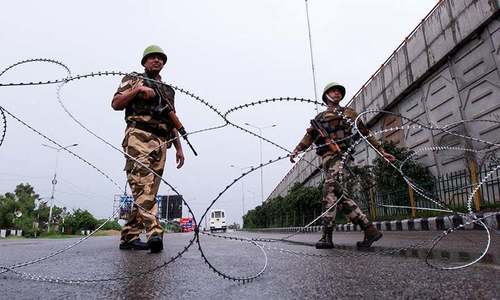
Since the Indian government on August 5 repealed Article 370 of its constitution — stripping occupied Kashmir of its special status — a strict lockdown and communications blackout has suffocated the region into silence. It has now been in place for 73 days.
On Saturday, government spokesman Rohit Kansal told a press conference that all phones linked to a monthly subscription "will stand restored and be functional from noon on Monday", adding that the measure would apply to all districts of occupied Kashmir.
He said the decision was taken after a security review in the disputed region.
At the time, Kansal had not given any indication on whether internet services would also be restored.
Residents appeared relieved on Monday after facing difficulties during the long communications embargo. But the disputed region continues to simmer with anger.
"It is a relief," said Mohammad Akram, a trader. He was, however, quick to add how Kashmiris are expected "to thank the government for giving them basic amenities".
Many also expressed their angst at the situation, with some saying that the past two months were akin to living in the Stone Age without lines of communication.
"Thank you, India. You have finally decided to partially restore our digital rights," said Sameer Ahmad, a college student.
"When will you restore our political rights?"
Facing international pressure to ease people's suffering and restore normal life, Indian authorities announced last week that they would allow tourists back into the region after ordering them to leave in August because of security concerns. The government has said that internet facilities are being opened at tourist spots in the region.
"Whatever India does in Kashmir, it is driven to consolidate its position," said Ali Mohammad, a schoolteacher.
"They stopped phones and internet services to stop us from registering protests. Now they are restoring these services to cater to tourists and declare normalcy in Kashmir."
Authorities also released three low-ranking politicians in occupied Kashmir last week. However, prominent Kashmiri politicians remain detained in their homes or in jails.