Simplified tax regime approved to attract foreign investment

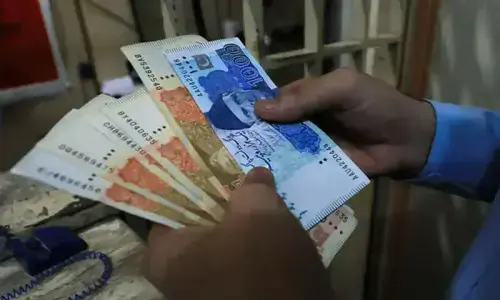
ISLAMABAD: In a bid to attract portfolio investments, the Economic Coordination Committee (ECC) of the Cabinet on Wednesday offered a simple tax regime to non-resident companies for making investments in the local debt market with a view to deepen the country’s capital markets.
As per the new regime, government has simplified the processes for non-resident companies having no permanent establishment in Pakistan to invest big funds in the stock market and money market by offering simple regime.
The ECC meeting, chaired by Adviser to PM on Finance and Revenue Hafeez Shaikh, approved the new tax regime which he said would help increase foreign exchange inflows and reserves.
ECC directs ministry to ensure steady supply of wheat and flour at regular prices
Currently, the double taxation treaty with major countries also discourages big funds to invest in Pakistan. However, under the simple tax regime, the government has offered 10 per cent capital gains and 10pc interest rates to these funds for investment in local debt market.
“We have given them re-assurance that there will be no additional taxes”, a senior tax officer said after the ECC meeting. The purpose of the simplified procedures is to encourage inflow of foreign currency in special convertible rupee account, which can later be converted into local rupees for investment in money market and stock market.
The new procedures will also reduce the cost of debt for the government.
The ECC also approved revision of cess rate on tobacco sector for the fiscal year 2019-20 and payment of outstanding amount of Rs5.85 billion as gas subsidy to the fertiliser industry.
On the wheat issue, the meeting was informed that prices are stable in most parts of the country while there are certain areas and places such as Karachi where prices have risen.
The ECC directed the Ministry of National Food Security and Research to consult with all stakeholders and ensure steady supply of wheat and flour at regular prices.
The committee also considered a proposal by the Ministry of Energy for application of quarterly adjustment notified on July 1 to the zero-rated industrial consumers and for it to be charged over and above the notified tariff for zero-rated industrial consumers at 7.5 cents as well as a proposal to the effect that financial cost surcharge, Neelum-Jhelum Surcharge, taxes and positive fuel adjustments would not be part of billing to zero rated sector industrial consumers and would be part of subsidy claims to be picked by the government.
The previous government had provided Rs3.5 per unit relief package to industrial consumers that came to an end early this year owing to the incumbent government’s decision to reduce subsidies. However, the move increased power tariff for industrial consumers who had been promised a fixed rate of 7.5 cents per unit.
The matter was being agitated by industrial consumers that the government had backtracked on its promise due to which their input costs had gone up. The power ministry therefore proposed that certain surcharges on power tariff should not be applicable to these consumers.
The ECC also discussed pros and cons of the proposal in view of its financial implications and asked the Finance Division to hold a meeting with the stakeholders, including the Power Division, Commerce Division and Industries and Production Division and resubmit the case to ECC with solid proposals.
The ECC also took up a proposal for extension and rehabilitation of gas network in the oil and gas producing districts of Khyber Pakhtunkhwa and referred the matter to the Development Working Party headed by the secretary petroleum for an appropriate decision.
Published in Dawn, September 5th, 2019