Explainer: What Boris Johnson’s move to suspend UK Parliament means for Brexit


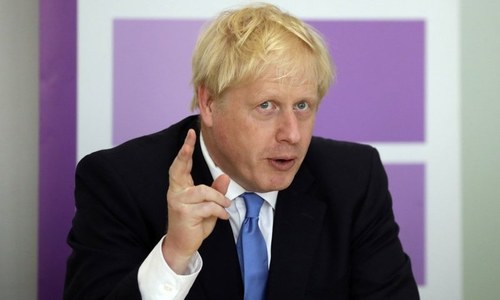
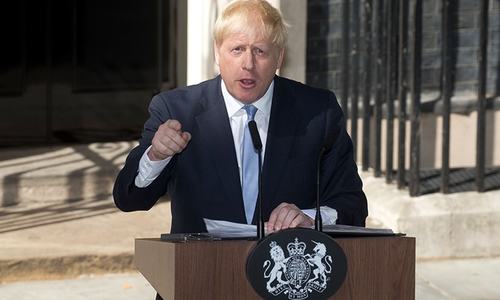
The move by British Prime Minister Boris Johnson to suspend Parliament in October could make it more likely that Britain falls out of the European Union on October 31 without a deal, wreaking havoc for people and businesses.
The decision was slammed by some as the ploy of a “dictator”, but Brexit supporters cheered it as a decisive move to finally bring the country out of the EU three years after the popular vote to leave.
Read: ‘Boris Johnson is wrecking Brexit deal’
As politicians gear up to fight over this suspension and how Brexit should play out, here's a look at what Johnson's gambit means for Brexit.
What did Johnson do?
The prime minister asked Queen Elizabeth II to give her speech outlining the government's agenda on October 14. Parliament is normally suspended before a so-called Queen's Speech, usually by about a week. The queen agreed to the suspension.
Why is it important?
It could make a no-deal Brexit more likely.
The suspension would add to an already planned suspension from mid-September for about three weeks that is meant to allow the main political parties to hold their annual conferences. That means that when lawmakers come back to work on September 3, they would have only a few days of work before they break up again until mid-October. That would leave them very little time to debate and pass legislation to keep Britain from leaving the EU without a deal on October 31.
Johnson tells Germany and France: do a Brexit deal
Johnson has said he will bring Britain out of the EU on that date no matter what. That could create huge disruption, particularly to business and trade, as border checks and tariffs are restored between Britain and the bloc.
Can UK lawmakers prevent this suspension?
It's unclear, but they will try.
The lawmakers could call for a no-confidence vote in the government, which if passed would normally cause it to collapse. But Johnson is likely to simply ignore that call, says Scott Lucas, professor of international politics at the University of Birmingham.
The lawmakers are likely to try to keep Parliament open by passing emergency legislation when they reconvene on September 3. And there will be battles in court starting immediately, Lucas said. But it's unclear whether they will have enough time.
“This is the biggest constitutional crisis since the 1930s,” when King Edward VIII abdicated, Lucas says.
The outlook is murky because, unlike many modern democracies, Britain doesn't have a written constitution and relies heavily on convention to guide it.
What is the Queen's role? Can she prevent a no-deal Brexit?
While the queen, in theory, has the power to block laws or pick a new government, the convention is that she should not take political decisions on her own. For example, it is the government that writes the Queen's Speech; she just reads it out. And on Wednesday, she agreed to the government's request for a suspension.
The monarch is known for being cautious about intervening in any political matters, so it's highly unlikely she would step in at any point to prevent a no-deal Brexit.
Can the EU stop a no-deal Brexit if the UK Parliament cannot?
No. Britain will leave the EU on October 31 unless one of three things happen: the country's divorce deal with the EU is ratified by Parliament; it asks for an extension to the date and the EU agrees; or Britain withdraws its decision to leave the EU.
How likely is a no-deal Brexit now?
The likelihood has risen since Johnson became prime minister in July, and the suspension of Parliament seems to increase that possibility. The pound, which is one of the best indicators of international investors' confidence in the country, fell on Wednesday's news. It is around $1.2211, from $1.2290 the day before and not far from the 28-month lows of below $1.2100 it hit earlier this month.
Brexit supporters say that if Johnson makes the threat of a no-deal Brexit credible, he is more likely to be able to get the EU to renegotiate the divorce deal before October 31. But some experts note that the EU is already taking that threat seriously and that the UK has more to lose economically than the rest of the EU.