Modi complains to Boris about occupied Kashmir protests outside India's London HC


 49
49


Correction: An earlier version of this article erroneously attributed the statement to the British Foreign Office, instead of The Ministry of External Affairs of India. The error is regretted.
Indian Prime Minister Narendra Modi has spoken to his British counterpart, Boris Johnson, about demonstrations over New Delhi's decision to strip occupied Kashmir of its special status, outside the Indian high commission in London, the Indian foreign ministry said.
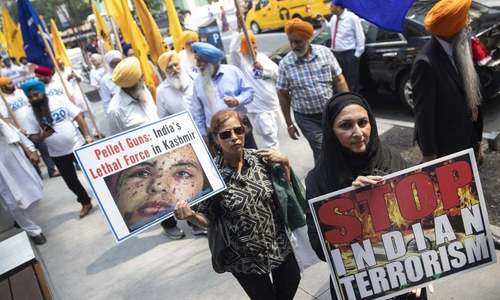
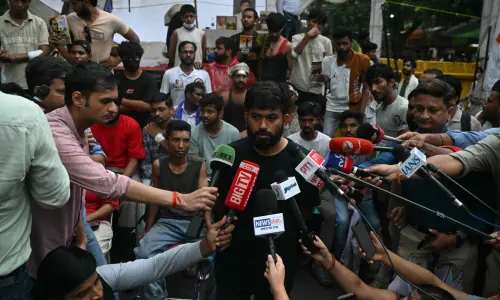
Thousands of people, many waving Pakistani and Kashmiri flags, protested outside the high commission last week, on India's Independence Day, against Modi's withdrawal of occupied Kashmir's special status. Modi's supporters and members of his ruling Bharatiya Janata Party (BJP) alleged that demonstrators had attacked Indian women and children with bottles and eggs and that British authorities had failed to thwart them.
Police in London had said that four people were arrested for affray, obstruction of police and possession of an offensive weapon.
Modi, in a telephone call with Johnson on Tuesday, said vested interests were pursuing their agenda through violent means.
"In this context, he referred to the violence and vandalism perpetrated by a large mob against the High Commission of India in London on the last Independence Day of India," the foreign ministry said in a statement.
"Prime Minister Johnson regretted the incident and assured that all necessary steps would be taken to ensure safety and security of the High Commission, its personnel and visitors," the ministry said.
Modi also told Johnson that terrorism was a problem for both India and Europe and that measures had to be taken to fight it, according to the Indian foreign ministry's statement.
“He [Modi] stressed the importance of effective steps to ward off the threats posed by radicalisation, violence and intolerance, particularly in the context of the expanding footprint of terrorist organisations such as ISIS,” the ministry said, referring to the militant Islamic State group.
Modi's revocation of occupied Kashmir's special status in the Indian constitution means people there will lose exclusive rights to property, government jobs and college placements and open them up to Indians.
The change has sparked fury in Pakistan and Islamabad has sought the support of the United States, Britain and other powers to pressure India over the occupied territory.