Prepared to go to any extent to fulfil our obligations to Kashmiri people: ISPR



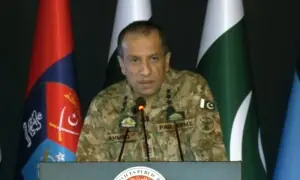
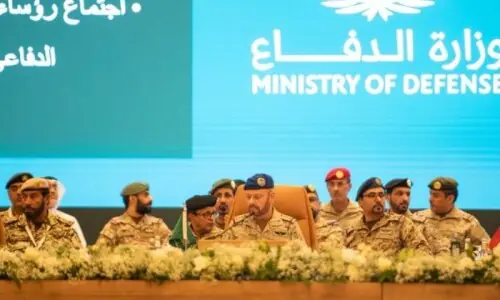
The military leadership "fully supported the government's rejections of Indian actions regarding Kashmir" and is "prepared and shall go to any extent to fulfil our obligations [to the Kashmiri people]," Director General of Inter-Services Public Relations (ISPR) Maj Gen Asif Ghafoor said on Tuesday after the conclusion of a Corps Commanders meeting in Rawalpindi.
"Pakistan never recognised the sham Indian efforts to legalise its occupation of Jammu & Kashmir through article 370 or 35-A decades ago, efforts which have now been revoked by India itself," Ghafoor said in a series of tweets from his official account.
"Pakistan Army firmly stands by the Kashmiris in their just struggle to the very end. We are prepared and shall go to any extent to fulfil our obligations in this regard,” the DG ISPR quoted Army Chief Gen Qamar Javed Bajwa as saying.
The meeting was held at the General Headquarters in Rawalpindi to discuss India's decision to revoke Article 370 of its constitution, stripping occupied Kashmir of its special status.
Revoking occupied Kashmir's special status
Yesterday, India's ruling Bharatiya Janata Party stripped Kashmiris of the special autonomy they had for seven decades through a rushed presidential order. An indefinite curfew — that has entered its second day — was imposed in occupied Kashmir and elected leaders were put under house arrest.
By repealing Article 370 of the constitution, people from the rest of India will now have the right to acquire property in occupied Kashmir and settle there permanently. Kashmiris as well as critics of India’s Hindu nationalist-led government see the move as an attempt to dilute the demographics of Muslim-majority Kashmir with Hindu settlers.
Furthermore, Indian Home Minister Amit Shah, who is also president of the BJP, moved a bill to bifurcate the state into two union territories — one, Jammu and Kashmir, which will have a legislature, and the other, Ladakh — to be directly ruled by New Delhi.
Pakistan had strongly condemned the move and vowed to "exercise all possible options to counter the illegal steps" taken by India. A joint parliamentary session was summoned by President Arif Alvi so that the political leadership can devise future strategy with regards to occupied Kashmir.