Afghanistan, Pakistan resume transit trade talks


 9
9


ISLAMABAD: Pakistan and Afghanistan on Friday resumed talks to iron out differences in the way of transit treaty after a three-year hiatus.
Talks between the two neighbours had collapsed in September 2015 after Kabul insisted on including India in transit treaty negotiations and the trilateral trade agreement involving Pakistan, Afghanistan and Tajikistan.
The turnaround came after Afghan President Ashraf Ghani met with Prime Minister Imran Khan in Islamabad on June 27 where both sides agreed to deepen trade relations.
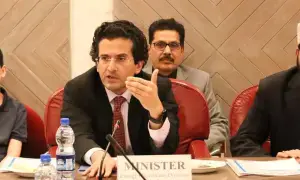
On Friday, a Technical Working Group (TWG) of Afghan officials met with Adviser to PM on Commerce Abdul Razak Dawood where both sides exchanged their concerns and proposals.
During the meeting, Dawood complained to Afghan officials over the unchecked pilferage of goods through transit trade and asked them to address the issue.
He also asked officials to submit their revised draft on the Afghanistan Pakistan Transit Trade Agreement (APTTA) which has been pending since 2017.
On the other hand, the Afghan side agreed to increase bilateral trade through mutual cooperation by addressing all the issues which are negatively affecting trade relations.
The official leading Afghan delegation proposed a joint commission to resolve issues including transit trade.
He stressed the need to translate political will of leadership in both countries to revive trade ties by cooperating on technical level including understanding of customs authorities on both sides.
Federation of Pakistan Chambers of Commerce and Industries President Daroo Khan Achakzai also welcomed the revival of talks between the two countries on trade issues.
Deliberation on transit trade agreement will lead to increasing the bilateral trade volume, he added.
Pakistan’s exports to Afghanistan peaked at $2.4 billion in 2010-11 and remained north of $2bn mark in 2011-12 and 2012-13 before falling to $1.3bn in 2018-19 after talks between the two sides broke down.
Dawood is expected to visit Kabul next to continue talks and understand issues hampering trade relations between the two neighbours.
Stressing the need to continue negotiations, he pointed out that trade between Kabul and Islamabad can grow if trade barriers are removed.
He also stressed on the need to implement APTTA in true letter and spirit and pointed out that Pakistan can play an instrumental in ensuring Afghanistan’s food security.
Published in Dawn, July 13th, 2019