LAHORE: Democracy is incomplete without appropriate and meaningful representation of women in local institutions. Moreover, the new Punjab Local Government Act of 2019 offers little to women for their political participation, as their reserved seats have decreased while age limit for candidates has increased from 21 to 25 years, excluding over 30 million young population from process.
Therefore, the Punjab government must amend the PLGA of 2019 to enhance ratio of women representation to at least 33 per cent through reserved seats and ensure inclusion of the youth by decreasing the age limit for candidates from 25 to 21 years.
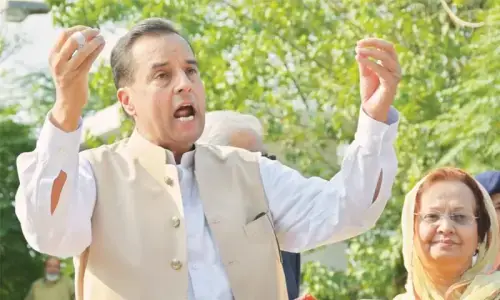
Speakers said this at a conference titled ‘The new Local Govt. Law and Women Representation’, by the Women in Struggle for Empowerment (WISE) on Saturday. Former councillors from Nankana Sahib, Sheikhupura and Lahore joined the event.
WISE Executive Director Bushra Khaliq said the new act did not offer much to women.
“Though women are 49% of the population, the ratio of their representation at different tiers like metropolitan, municipal corporation and tehsil council etc is not more 16 per cent,” she said. She added this gradual decrease negated the government commitments under sustainable development goals, national policies and action plans devised for the political empowerment of women.
Zahid Islam said the new act was loaded with bureaucratic interference and oversight.
“The real powers are concentrated with the provincial government instead of local governments, which negates the real spirit of Article 140-A and Article 32 of the Constitution,” he said, adding that the Punjab Village Panchayats and Neighborhood Councils Act of 2019 have no connection with the PLGA-2019.
“Elections for local councils would be held on party basis, while Punjab Village Panchayat and Neighbourhood Councils Act 2019 restricts candidates to use platform of the political parties,” he said.
In fact, the whole area of the council constitutes one multi-member ward for the election of all members. In total, roughly 30,000 local councils will be formed which will have nearly 200,000 elected councilors across Punjab, he clarified.
Lawyer Rabbiya Bajwa said the multi-member method of voting would strengthen the political parties instead of individuals. The provision of “commons assembly” would help empower citizens to make their elected representatives accountable.
Published in Dawn, June 30th, 2019