India votes in penultimate phase of seven-round general election


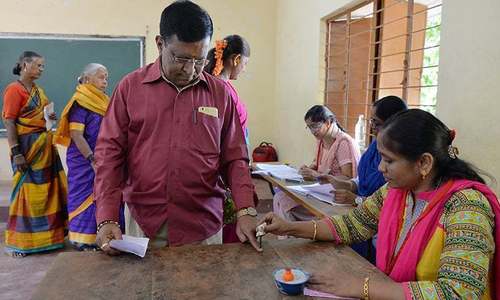
Voters in Delhi and elsewhere in India's north lined up early on Sunday to cast their ballots in the second-to-last round of a seven-phase general election, with the opposition seeking a united stand to deny Prime Minister Narendra Modi a second term.
More than 100 million people across seven states are eligible to vote in the sixth phase of the 39-day-long poll, which Modi began on April 11 as front-runner after an escalation of tension with neighbouring Pakistan.
But diverse opposition parties have recently taken heart at what they see as signs Modi's Hindu nationalist Bharatiya Janata Party (BJP) may be losing ground and have begun negotiations over a post-election alliance even before polling ends on May 19. Votes will be counted on May 23.
Some voters in Delhi said they were backing Modi because they were won over by his tough stand on security.
“I have voted for Modi's sound foreign policy and national security,” said a 36-year old first-time voter who declined to be identified.
Political analysts say that state-based and caste-driven parties could be decisive in determining the make-up of the next government, as a lack of new jobs and weak farm prices have hurt the BJP.
“Regional parties will play a bigger role compared to the previous 5 years or even 15 years,” said K.C. Suri, a political science professor at the University of Hyderabad. “They will regain their importance in national politics.”
Recent weeks have also been marked by personal attacks between leaders, including comments from Modi about the family of Congress President Rahul Gandhi, the scion of the Nehru-Gandhi political dynasty.
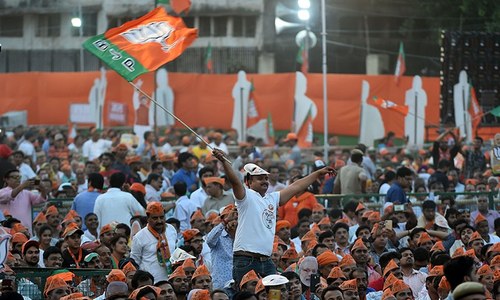
At a recent rally Modi called Gandhi's late father, former Prime Minister Rajiv Gandhi, “corrupt no. 1”. The BJP says Modi was reacting to Rahul Gandhi calling him a thief.
“The political vitriolic has become intense, and negatively intense,” said Ashok Acharya, a political science professor at the University of Delhi.
“It seems as if this particular election is all about a few political personalities. It is not about issues, any kind of an agenda.”