May holds 'constructive' Brexit crisis talks with UK opposition


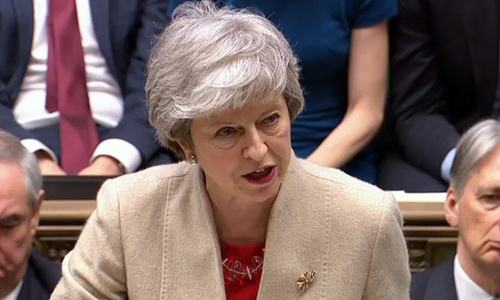
Prime Minister Theresa May held “constructive” talks Wednesday with Britain's opposition leader in a bid to forge a Brexit compromise that avoids a chaotic “no-deal” departure from the EU in nine days.
May tore up her steadfast strategy and sought Labour leader Jeremy Corbyn's support in a surprise last-minute gesture that could determine the fate of the country and her government.
Her divorce deal with the other 27 EU nations has been rejected three times by parliament and patience is wearing thin in Brussels as an April 12 deadline to end Britain's 46-year membership nears with no agreement in sight.
The premier said Tuesday she would seek another “short” Brexit extension at an EU leaders' summit in Brussels on April 10.
She crucially added that she was now willing to bend her previous principles and listen to proposals for much closer post-Brexit trade relations with the bloc than most in her Conservative party were ready to accept.
Both sides described Wednesday's meeting as preliminary but constructive.
“Today's talks were constructive, with both sides showing flexibility and a commitment to bring the current Brexit uncertainty to a close,” a Downing Street spokesman said.
“We have agreed a programme of work to ensure we deliver for the British people, protecting jobs and security.”
A Labour spokesman said the two held “constructive exploratory discussions about how to break the Brexit deadlock”.
Ministerial resignations
The British premier's sudden change of tack was received with caution by EU leaders who wish to see the split resolved by the time European Parliament elections roll around at the end of May.
European Commission president Jean-Claude Juncker delivered a nuanced address to the European Parliament in which he vowed to “personally do everything I can to prevent a disorderly Brexit”.
“If the United Kingdom is in a position to approve the withdrawal agreement with a sustainable majority by 12 April, the European Union should be prepared to accept a delay until 22 May,” Juncker said.
German Chancellor Angela Merkel likewise vowed to “fight until the last hour” to avoid a no-deal outcome. But May's decision to hear out Corbyn's demand to remain in a customs union with the bloc enraged the staunchly pro-Brexit wing of her Conservative party.
Junior minister Nigel Adams resigned in protest at her “grave error” in judgement.
Fellow junior minister Chris Heaton-Harris also said he was quitting his Brexit department post because he thought Britain should have left on the original deadline date of March 29.
Yet the most prominent Brexit-backing ministers held their fire as all eyes turned on a flurry of meetings between government and Labour leaders are expected to hold over the coming days.
Scotland's First Minister Nicolas Sturgeon — a pro-EU lawmakers who heads the much smaller opposition SNP party — said she hoped “Labour doesn't sell out here for a bad deal”.
“I would be very wary,” Sturgeon said after her own talks with May.
Closer union
May's government has previously rejected the customs union idea because it would keep Britain from striking its own trade agreements with giant nations such as China and the United States.
Brexit Secretary Stephen Barclay said failure by May and Corbyn to reach a compromise would prompt the two sides to try to come up with mutually-acceptable options that would be put up for a binding parliamentary vote.
May hopes to bring an approved deal with her to Brussels so that Britain can leave the bloc the day before the first nations hold their European Parliament votes on May 23.
The British pound has moved higher on expectations of the sides managing to avoid a messy breakup in the coming days.
But the Bank of England's governor stressed that these risks remained “alarming high” in view of no-deal being the default option that could “happen by accident” if the latest talks broke down.
Parliament was due to vote later Wednesday on a law that would force May to seek an extension should a no-deal seem imminent next week.