Britain's May reportedly on the brink amid Brexit crisis


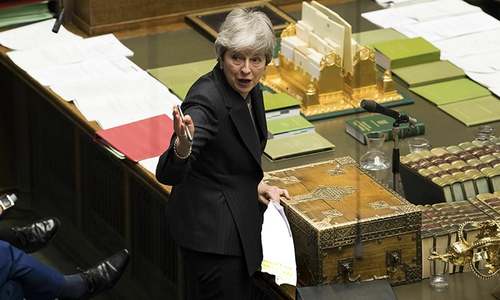
Prime Minister Theresa May is making a last-ditch bid this weekend to win support among British MPs for her EU divorce deal ahead of another pivotal week in the Brexit process — but faced reports her leadership is under imminent threat.
After securing a short delay to Britain's departure from the European Union beyond March, May appealed directly to lawmakers to contact her "over the coming days as parliament prepares to take a momentous decision".
"I hope we can all agree that we are now at the moment of decision," May wrote to MPs on Friday, as she softened her tone after lambasting them earlier this week for their intransigence over her plan.
"You have a difficult job to do and it was not my intention to make it any more difficult. People on all sides of the debate hold passionate views and I respect those differences."
Next week could see MPs vote for a third time on her unpopular withdrawal agreement — though May said in her letter this would only happen if there were signs of "sufficient support".
The House of Commons has already overwhelmingly rejected the pact twice since it was struck with the EU last year and the Democratic Unionist Party, her parliamentary allies, indicated Friday they remain opposed.
The government is set to publish on Monday its plans for the House of Commons next week.
However, following a particularly chaotic week even for May's crisis-hit government, speculation was rife late Saturday that Conservative colleagues were poised to force her to stand down.
The Sunday Times reported she was "at the mercy of a full-blown cabinet coup", with plans afoot for her defacto deputy David Lidington to take over in a caretaker capacity.
The newspaper said it had spoken to 11 senior ministers who "confirmed that they wanted the prime minister to make way for someone else" and planned to confront her at a cabinet meeting on Monday.
The Mail on Sunday said May could be ousted "within days" and Environment Secretary Michael Gove, a prominent Brexiteer, could take over as interim leader.
Uncertainty reigns
Britain's parliament, and cabinet, has been deadlocked for months over Brexit, with lawmakers unable to decide how to implement the 2016 referendum vote to leave, reflecting bitter divisions nationwide.
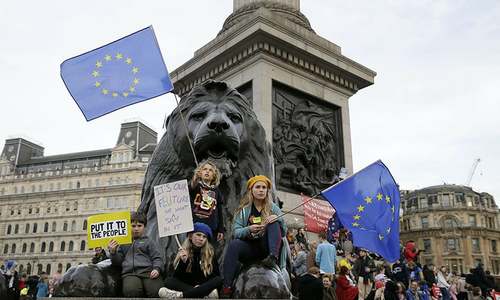
On Saturday, an estimated one million pro-Europeans marched through central London demanding another public vote on leaving the bloc, according to organisers.
Following the agreement with the EU to postpone Brexit — which MPs must still vote into law next week to prevent a no-deal departure on Friday — the path forward still remains highly uncertain.
If May's deal finally wins MPs' backing Britain will depart on May 22 under the terms of her deal, but if it is not passed in the coming weeks London must outline a new plan or face a no-deal Brexit as early as April 12.
A request then for another, likely lengthy, extension would require holding European Parliament elections in May.
The prime minister and Brexiteers have decried the prospect, saying it would be unfair to the narrow majority of Britons who voted to leave the bloc in 2016.
"Am I prepared to go back to my constituents and say we're not leaving the EU, we're going to go for a much longer extension...?" Education Minister Nadhim Zahawi told the BBC.
"I'm not prepared to do that. I don't think the prime minister is prepared to do that."
'Alternative way'
Reports Saturday suggested May was close to allowing MPs so-called "indicative votes" to reveal the level of support for the various ways forward.
They range from stopping Brexit altogether or holding a second referendum, to remaining in a customs union with the EU or its single market.
But ardent Brexiteers in the cabinet are said to be against the move, which could prompt mass resignations.
Amid the impasse, lawmakers have signalled they could try to wrestle control of the legislative process away from May's floundering government to force indicative votes.
An amendment tabled by a cross-party group of senior MPs earlier this month, which would have given them temporary control of what motions parliament considers, failed by just two votes.
Labour lawmaker Hilary Benn, chair of the Commons' Brexit committee, has already unveiled an updated version to be laid Monday.
"It aims to start the process of trying to identify whether there is an alternative way forward that the House of Commons can support," he said on Twitter.