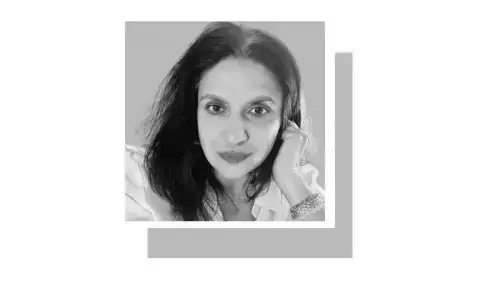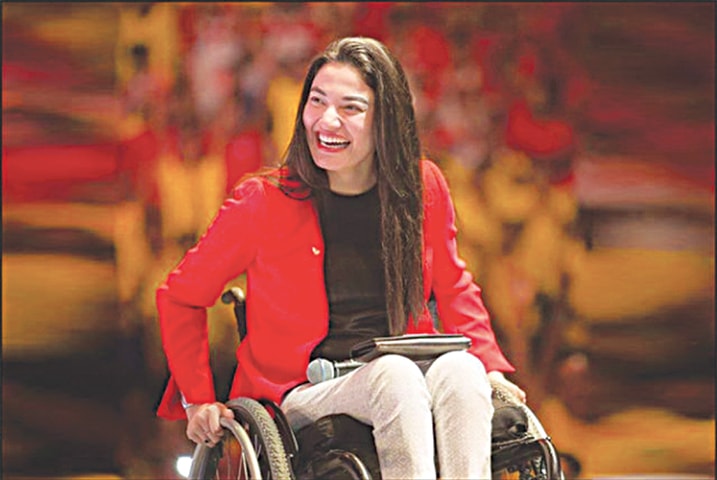
UNITED NATIONS: The opening session of this year’s United Nations women’s summit in New York featured Muniba Mazari, a wheelchair-bound Pakistani who advocates accessible infrastructure for women worldwide. She showed exemplary courage in rebuilding her shattered life after a deadly car accident left her paralysed waist down.
The summit began on March 11 and will conclude on March 22.
Sharing the world stage with Ms Mazari, 28, was Mary Fatiya, a young South Sudanese woman who dreams of having affordable health care, and together they inspired an audience of thousands on gender equality and women’s rights in the gold-and-blue hall of the UN General Assembly.
The story of their struggle to surmount overwhelming odds was truly moving, leaving no eye dry in the auditorium.
In a joint statement at the 63rd session of the UN Commission on the Status of Women (CSW), Ms Mazari and Ms Fatiya both asked for basic social protection to be extended to women and girls around the world.
“Being a woman has its challenges. Being in a wheelchair is the cherry on top,” Ms Mazari, who is also the Goodwill Ambassador for Pakistan at UN, said in an address to several thousand activists, diplomats and academics.
Noting that at age 21 a car accident had left her using a wheelchair, Ms Mazari said she has so much titanium in her body that she is called the “iron woman” of Pakistan. However, major barriers are accessibility and opportunity.
Her ideal world would be “more about me and less about my wheelchair”, where if she asks for accessible infrastructure, it is not seen as asking for a favour, but her right.
Ms Fatiya, who recalled going long distances to a school where only two toilets were available for around 600 children, said her ideal world centred on a peaceful existence, access to healthcare and good infrastructure: “I’m not asking for a luxurious road. I just need it and it’s my right.”
“I was deeply touched by the stories of these women of courage,” a veteran diplomat said.
The annual meeting of the commission, which dates back to 1947, has brought together more than 9,000 representatives from civil society organisations to the UN. This year’s theme is “social protection systems, access to public services and sustainable infrastructure for gender equality and the empowerment of all women and girls”.
Muniba Mazari, Pakistan’s first female Goodwill Ambassador to promote gender equality and the empowerment of women, has been an active part of many social campaigns. She has made her mission to spread awareness about child violence and abuse, gender discrimination and to push for children’s education.
Muniba Mazari was one of two Pakistanis to be named BBC’s 100 most inspirational women in 2015. She works as an occasional anchor at Pakistan Television, the organisation’s first wheelchair user.
In addition, Muniba is the first wheelchair-using model for the Toni & Guy chain of hairdressing salons in Pakistan, featured in Forbes “30 under 30” in 2016.
While lying in a hospital bed after her accident nine years ago with a broken body, half-paralysed and barely able to move her hands, she began to paint in order to distract herself from the tragedy. She says it was painting that kept her alive.
According to one writer, despite the immense pain she has endured because of the accident, she considers her pain “beautiful” since it allows her to connect with others also in pain.
Ms Mazari’s life-changing experience has turned her into an activist, encouraging women and girls who have experienced discrimination or violence to live without fear or fight the pain.
It was Ms Mazari’s motivational speech in Nov 2014 at an event organised in Islamabad that propelled her into the public eye. Her speech contained a message of hope, urging people not to give up on life.
Her appeal transcends generations and represents the voice of women, men, girls and boys across Pakistan on issues of gender inequality and discrimination.
With her impressive presence and eloquence, Ms Mazari, a Baloch, was heard in pindrop silence and won hearts and minds at the world body.
Published in Dawn, March 19th, 2019