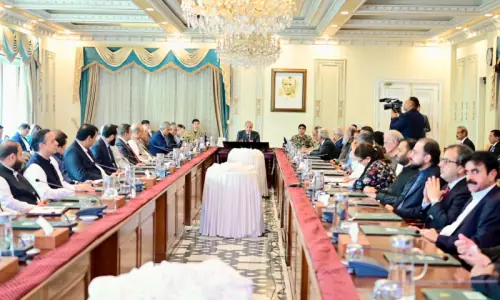
Qureshi denounces 'racist elements' in Western states in wake of NZ terror attacks

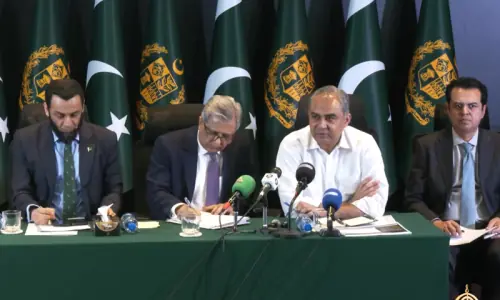
With yesterday's deadly terrorist attacks targeting Muslims in Christchurch, New Zealand in the backdrop, Foreign Minister Shah Mahmood Qureshi on Saturday denounced rising racism in Western countries.
Addressing a press conference in Multan, the foreign minister said that immigration and migration from "crisis areas" has become a huge issue for Western countries and "racist elements" are taking advantage of it.
"It [rasicm] is affecting their politics as well, and they are committing such acts [yesterday's twin shootings]. You saw how that wretched man, who carried out the attack, had installed a camera in his helmet. What was the purpose of installing a camera? It was so that he could film his entire attack and share it live with the world," the foreign minister told journalists.
"This is their mental state."
Qureshi insisted that the security of mosques is as important as that of other religious centres.
"Just like we talk about [providing security to] churches, mandirs, gurudwaras — like we should — the protection of mosques is also needed," he said, pointing out that the attacks were carried out during Friday prayers, which are attended by a large number of people.
He said terrorism is a "global phenomenon" which is not tied to religion and lauded New Zealand Prime Minister Jacinda Ardern's response to the attacks, pointing out that she had termed the attacks as terrorism.
Qureshi declined to answer questions regarding Pakistanis who are missing since the attack, insisting that until the New Zealand authorities communicate information about them, making any claims would be "speculation".
"We are waiting for identification of [missing] Pakistanis. Obviously, I'm getting more worried with time as we have not been able to contact them and I fear that they might be on the list of martyrs. But nothing has been communicated to us officially yet, and to say anything before an official confirmation will be speculation."
He hoped that more details about the twin shootings would be released soon, now that the police have arrested suspects.
The foreign minister hoped that instead of stopping people from going to mosques, the governments of Western countries will provide security to their citizens.
De-escalation
In response to questions about relations with India, Qureshi said that tensions between the neighbours have decreased.
A Pakistani delegation's visit to India for discussions over the Kartarpur Corridor project and the release of a joint statement after the meeting is a sign of de-escalation, he said.
However, he insisted that the country needs to keep its guard up till elections in India are over.
"The election process in India will end on May 19. Until then, we cannot put anything past the Modi government," he said, adding that the state needed to be vigilant.
He addressed the Kashmir issue as well and said that the world had finally started to take note of Indian brutalities in held Kashmir despite New Delhi's efforts to portray the Kashmiri struggle as "terrorism".
He recalled that the Organisation of Islamic Cooperation had recently equated Indian aggression in occupied Kashmir with "state terrorism".
The foreign minister, when asked about rumours that Afia Siddiqui was being released, said that "it is easy to speculate", particularly on social media.
He revealed that he had been trying to secure Siddiqui's release and had also been visited by her sister; but, he said, every time the matter of Siddiqui's release was brought up, the United States authorities cited American laws as a hindrance.
He further advised that if Siddiqui's sympathisers could keep a low profile of the issue, it would help the prisoner's case.