Split over asylum laws, EU leaders aim to keep migrants out

BRUSSELS: Hopelessly divided over how to improve the European Union’s asylum system, EU leaders are set to underline their intention to keep beefing up Europe’s borders and outsource their migrant challenge to the countries of northern Africa.
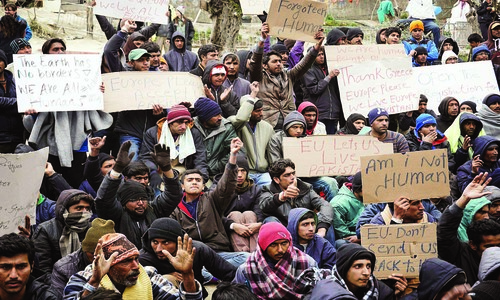
The arrival in Europe of well over a million people in 2015 seeking sanctuary or better lives sparked one of the 28-nation bloc’s biggest political crises. Mediterranean coastal states felt abandoned by their partners as they struggled to cope. Others erected fences to keep migrants out.
View From Abroad: Lies, immigration and the battle for Europe’s soul
Countries bickered over who should take responsibility and whether they should be obliged to help. A refugee-sharing quota scheme was challenged in court. The foundation of Europe’s asylum system that migrants must apply for asylum and stay in the country they first arrive in remains a ticking policy time bomb that the EU has failed to defuse.
What has worked is money. Lots of it. Migrant entries into Europe have dropped to a trickle thanks to the much-criticised understanding it reached with Turkey. The EU has provided Turkey with around 3 billion euros ($3.4 billion), and could hand over 3 billion more, to help Ankara cope with Syrian refugees on its territory, plus other political and economic incentives.
The EU is trying to replicate different versions of that model with African countries like Egypt, Morocco, Niger and Tunisia that surround Libya; the conflict-torn country that has been the source of most people entering Europe.
In a draft of Thursday’s summit statement, EU leaders say “that the number of detected illegal border crossings has been brought down to pre-crisis levels, and that the overall downward trend continues.” “This is the result of the external migration policy of the Union, based, in particular, on control of external borders,” they will say, according to the text, which could still be modified.
“This policy should therefore be continued, further developed and fully implemented. Vigilance on all existing and emerging routes should be maintained,” they will say.
Published in Dawn, December 14th, 2018